


QUICK LINKS

Shower water vs tap water: What matters for hair & skin
TL;DR:
- Shower water’s chemicals can damage hair and skin more than drinking water due to direct heat exposure.
- Using a qualified shower filter can significantly reduce chlorine and mineral buildup, improving skincare and hair health.
- Regular filter replacement and moderation of shower temperature are key to minimizing the negative effects of tap water.
Most of us spend a lot of time thinking about what we put on our skin and hair — serums, masks, conditioners — but very little thought about what our shower water is actually doing. The water hitting your scalp and skin every day may be affecting your hair texture, skin hydration, and sensitivity more than the products in your bathroom cabinet. Shower water poses a greater risk to skin and hair than drinking water due to direct exposure and heat. If you’ve been dealing with dry skin, dull hair, or unexplained irritation, this guide will help you understand why your shower water deserves as much attention as your skincare routine.
Table of Contents
- How shower water and tap water differ in Australia
- How chlorine and hard water affect hair and skin
- Are showers more harmful than drinking tap water?
- How shower filters help: Fact vs. hype
- Our perspective: Why ‘shower water vs tap’ matters more than you think
- Next steps for healthier hair and skin
- Frequently asked questions
Key Takeaways
| Point | Details |
|---|---|
| Chlorine is a main culprit | Chlorine in shower water causes dryness, irritation, and dull hair—especially for women aged 21-50. |
| Showering impacts absorption | Hot showers can amplify chlorine and contaminant absorption by up to three times compared to drinking. |
| Filters offer real improvement | Lab-tested shower filters reduce chlorine exposure and help support healthier hair and skin. |
| Regional water matters | Water hardness and chlorine vary, with cities like Adelaide most affected while Melbourne is softer. |
How shower water and tap water differ in Australia
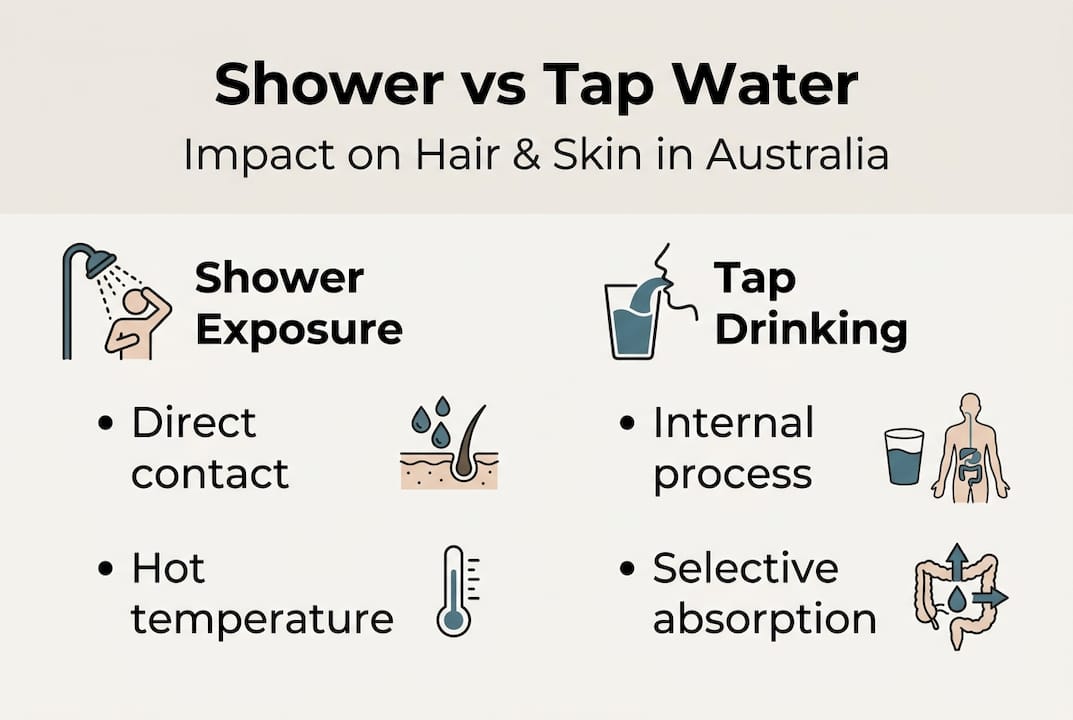
Tap water and shower water come from the same municipal source. The key difference is in how your body encounters each. Drinking water passes through your digestive system, which filters and processes what it absorbs. Shower water, by contrast, makes direct contact with your skin and hair for extended periods, and it’s usually hot — which matters a great deal.
Heat opens your pores and raises your skin’s permeability. This means your skin absorbs more of whatever is in the water during a hot shower than it would at cooler temperatures. It’s also worth noting that your hair cuticle (the outermost protective layer of each strand) responds directly to water chemistry in the same way it responds to heat styling.
Australian tap water is treated with chlorine as a disinfectant. According to Australian drinking water guidelines, chlorine levels sit between 0.5 and 2.5 mg/L in most cities, with a maximum allowable concentration of 5 mg/L. Water hardness, driven by dissolved calcium and magnesium, varies significantly by region.
Statistic: The maximum chlorine guideline for Australian drinking water is 5 mg/L — most city supplies sit well below this, but even lower concentrations affect hair and skin with repeated exposure.
| City | Typical chlorine (mg/L) | Water hardness | Impact on hair and skin |
|---|---|---|---|
| Adelaide | 0.5–2.0 | Very hard | High mineral and chlorine exposure |
| Brisbane | 0.5–1.5 | Moderately hard | Noticeable dryness and residue |
| Sydney | 0.2–1.0 | Soft to moderate | Lower mineral impact |
| Melbourne | 0.1–0.8 | Soft | Least mineral exposure |
| Perth | 0.5–2.0 | Hard | Significant dryness risk |
Key chemical factors that affect beauty outcomes include:
- Chlorine: Strips natural oils from skin and hair, disrupting moisture balance
- Calcium and magnesium: Build up on hair strands and skin surface, dulling hair and clogging follicles
- Chloramines: A byproduct of chlorine treatment that is harder to remove and equally irritating
- pH variation: Higher pH water can cause the hair cuticle to lift, leading to frizz and brittleness
Understanding water filtration basics helps put these differences in context and guides smarter choices for your routine.
How chlorine and hard water affect hair and skin
With the differences established, it’s important to understand exactly how these contaminants interact with your body at a structural level.
Chlorine is an oxidising agent. When it contacts your hair, it breaks down keratin — the protein that gives each strand its strength, elasticity, and shine. This process lifts the hair cuticle, leaving strands rough, porous, and more vulnerable to breakage. Over time, chlorine strips natural oils from both skin and hair, disrupting the moisture barrier that keeps hydration in and irritants out.
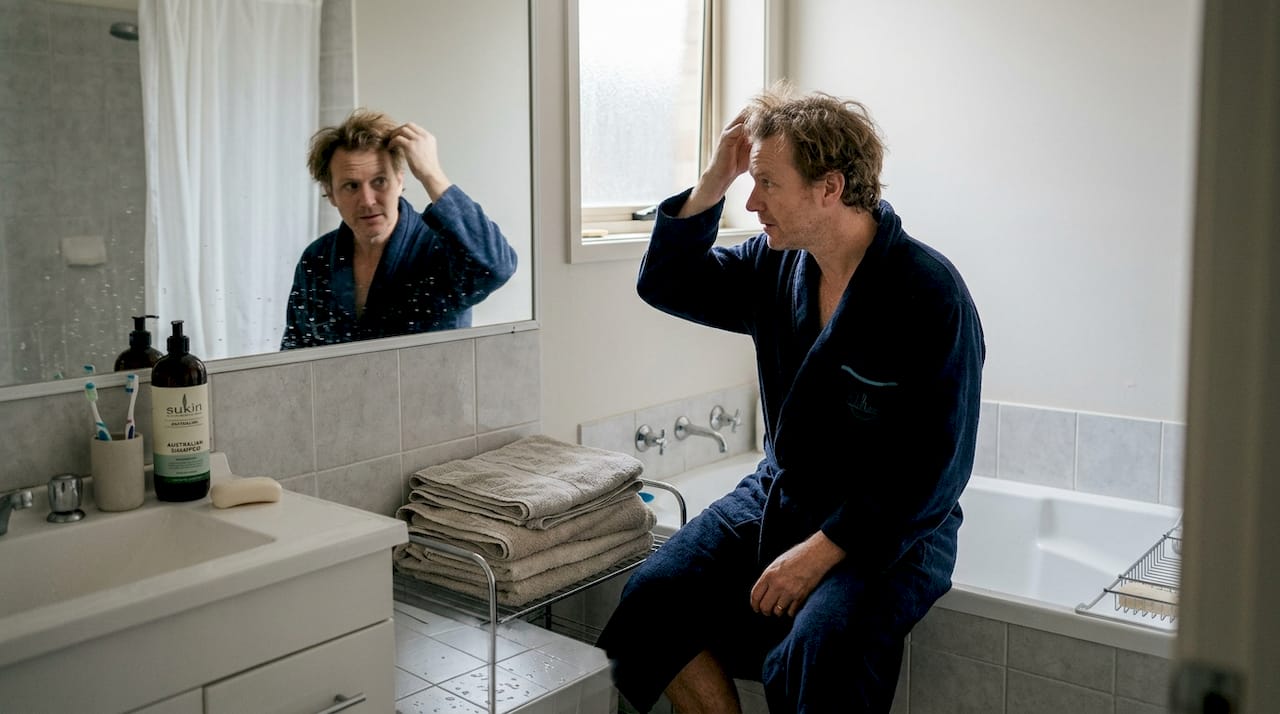
For your skin, the consequences are just as visible. Chlorine removes the sebum (natural skin oil) that protects your skin’s surface. Without that barrier, skin becomes dry, reactive, and more prone to sensitivity. In people with existing conditions like eczema or rosacea, regular chlorine exposure can trigger or worsen flare-ups.
Hard water compounds these effects. Calcium and magnesium ions bind to your hair and skin surface, creating a film that dulls hair’s natural shine, makes it harder to lather shampoo effectively, and leaves a residue on skin that contributes to congestion. Women in Adelaide, Brisbane, and Perth notice this most acutely. The ADWG guideline explanation outlines how these minerals are measured and why they matter.
“Chlorine in shower water is not just a chemical concern — it’s a daily beauty stressor that most people don’t realise they can address.”
The three most common signs that your shower water is affecting your hair and skin:
- Hair that feels dry or straw-like even after conditioning — chlorine and mineral buildup are disrupting the cuticle and stripping moisture
- Skin that feels tight or itchy after showering — natural oils have been stripped and the moisture barrier is compromised
- Colour-treated hair fading faster than expected — chlorine oxidises hair colour pigments, accelerating fade between salon appointments
Pro Tip: Shortening your shower time and using lukewarm rather than hot water reduces the amount of chlorine your skin absorbs during each session. Pairing this with scalp health tools can further support scalp circulation and overall hair health.
Are showers more harmful than drinking tap water?
Given that both shower water and tap water contain similar chemicals, the difference in impact comes down to how your body is exposed to them and at what temperature.
When you drink tap water, your digestive and immune systems process it. The gut lining is selective about what it absorbs, and the liver metabolises many compounds before they reach systemic circulation. Your skin, by contrast, is a large absorptive surface. Hot showers amplify chlorine absorption through the skin by up to two to three times compared with cool or cold water exposure. You can also inhale chlorine vapour in a hot shower, adding another exposure pathway.
| Factor | Drinking tap water | Showering in tap water |
|---|---|---|
| Chlorine exposure route | Digestive system | Skin absorption and inhalation |
| Effect of temperature | Minimal | Significantly increases absorption |
| Exposure to hair | None | Direct and repeated |
| Frequency | Several times daily | Once or twice daily, but prolonged |
| Hair and skin impact | Indirect and low | Direct and cumulative |
Reasons why shower exposure matters more for Australian women:
- Skin covers the entire body, creating a large absorptive surface during each shower
- Hair has no digestive barrier; it interacts directly with every chemical in the water
- Hot showers are the default in cooler months, increasing absorption significantly
- The average Australian shower lasts 7 to 8 minutes, providing sustained exposure
It’s also worth noting that expert opinions on water quality suggest the evidence for dramatic beauty transformations from water alone is nuanced. That said, independent reviews confirm that beauty benefits of filtration are well-supported when it comes to chlorine reduction.
Pro Tip: If you’re already using a water filter jug for drinking, that’s a good start — but prioritising chlorine reduction at the shower is likely to have a more visible impact on your hair and skin.
How shower filters help: Fact vs. hype
Once you understand why filtering shower water matters, the next question is whether shower filters genuinely deliver, and what to look for when choosing one.
The three main filtration technologies used in shower filters are KDF-55, activated carbon, and calcium sulphite. KDF-55 (Kinetic Degradation Fluxion media) uses a redox (reduction-oxidation) reaction to convert free chlorine into chloride, which is harmless and water-soluble. Activated carbon adsorbs chlorine and other organic compounds. Calcium sulphite works at both hot and cold temperatures, making it particularly effective for shower use.
According to independent testing, filters using KDF-55, carbon, or calcium sulphite can reduce chlorine by 90 to 99% when new, but this drops to around 64% at 5000 litres of use. This makes filter replacement timing a critical part of getting real results.
What to check before choosing a shower filter:
- Independent lab-test results: The brand should publish verified chlorine removal data, not just marketing claims
- Compatibility with Australian water: Some filters are designed for different water chemistries; check that yours suits local conditions
- Replacement schedule: Know the cartridge lifespan in litres, not just months, and replace on time
- Filtration stages: Multi-stage systems are more thorough than single-media filters
Real benefits of consistent shower filtration across different timeframes:
- Immediately: Less skin tightness after showering, reduced scalp irritation
- Within 4 to 8 weeks: Improved hair texture, fewer split ends, more manageable strands
- Long term: Maintained skin hydration, reduced sensitivity, slower colour fade for dyed hair
The PURITI shower filter is independently lab-tested for the Australian market, and filter cartridge replacements are straightforward to schedule based on your household’s water usage.
Pro Tip: Always ask for the actual lab-test data when evaluating a shower filter. Reputable brands publish results openly. If a brand can’t provide this, that’s a clear signal to look elsewhere.
Our perspective: Why ‘shower water vs tap’ matters more than you think
The facts are clear: frequent, hot, direct exposure to chlorinated water affects your hair and skin in ways that drinking the same water simply does not. But here’s what most beauty and wellness conversations still miss.
Conventional beauty advice tells you to invest in better products. It rarely asks you to look at what your water is doing before those products even get a chance to work. For women in Adelaide or Brisbane showering in hard, chlorinated water daily, no amount of premium conditioner fully compensates for what the shower itself is stripping away.
What most people also get wrong is the expectation of full water purification. You don’t need a pharmaceutical-grade filtration system for your shower. Expert nuance confirms that prioritising chlorine reduction is the meaningful step; chasing miracle claims beyond that is where the evidence gets thin.
“The best shower filter is not the one with the most marketing — it’s the one with independently published lab results and a realistic replacement schedule.”
Our advice: test your local water hardness if you’re in a known hard-water area, choose a well-tested filtration solution with transparent chlorine removal data, and moderate your shower temperature. Those three steps, done consistently, will do more for your hair and skin than most products on the shelf.
Next steps for healthier hair and skin
If what you’ve read here has prompted you to take a closer look at your shower water, the next step is straightforward. Start with a proven, lab-tested filter designed for Australian water conditions.
The PURITI Shower Filter removes 99.55% of chlorine using a five-stage filtration system, independently tested and with results published publicly. For a more complete routine, the Hair Ritual Bundle combines filtration with targeted scalp and hair care tools. Thousands of Australian women have reported real improvements in hair texture, scalp comfort, and skin hydration after making the switch. It’s a simple, evidence-based step that addresses the problem at the source.
Frequently asked questions
Is shower water safe for my hair and skin in Australia?
Australian shower water meets safety guidelines for drinking, but chlorine and water hardness can still affect hair and skin noticeably, particularly with frequent hot showers.
Do shower filters really improve hair and skin?
Independent lab tests confirm that quality shower filters remove over 90% of chlorine when new, which directly reduces the primary chemical stressor on your hair and skin.
Is showering in hard water worse than drinking it?
Yes, because hot showers amplify absorption of chlorine and minerals through the skin by up to two to three times, making direct shower exposure more impactful than ingestion.
How often do I need to change a shower filter?
Most shower filter cartridges last around six to eight months, but effectiveness drops to 64% at approximately 5000 litres of use — so replace your cartridge based on usage volume, not just time.


