


QUICK LINKS

What is water filtration? The science behind beauty
Australian tap water is treated to be safe to drink, but safe and gentle are two very different things. Chlorine, heavy metals, and mineral residue can pass through your taps legally and still wreak havoc on your skin barrier and hair cuticles. As tap water’s beauty impact becomes better understood, more Australian women are realising their water is working against their skincare and haircare investments. This guide breaks down what water filtration actually is, the science connecting water quality to beauty outcomes, and how to choose a system that genuinely supports your routine.
Table of Contents
- What is water filtration and how does it work?
- Why does water filtration matter for your beauty routine?
- Types of water filters: Which is best for skincare and haircare?
- How to maximise the benefits of your water filter
- The real beauty impact of water filtration: What experts get wrong
- Enhance your beauty routine with Australian-tested shower filters
- Frequently asked questions
Key Takeaways
| Point | Details |
|---|---|
| Water filtration basics | Removing chlorine and contaminants can noticeably improve hair and skin feel. |
| Chlorine’s effect | Filtered water helps reduce dryness, irritation, and frizz by removing harsh chemicals. |
| Pick the right filter | For beauty goals, KDF/carbon shower filters are best suited to Australian needs. |
| Filter maintenance matters | Regularly changing cartridges ensures you keep seeing beauty benefits over time. |
| Science-backed results | Lab-tested filters offer real, measurable improvements—focus on efficacy, not myths. |
What is water filtration and how does it work?
Water filtration is the process of passing water through one or more materials that trap, absorb, or neutralise unwanted substances. The goal is not to make water sterile, but to remove specific contaminants that affect taste, safety, or in the case of beauty, how your skin and hair respond to it.
There are four main filtration methods relevant to home and personal beauty use:
- Activated carbon filters: Absorb chlorine, chloramines, and volatile organic compounds through a process called adsorption. Common in pitcher filters, under-sink systems, and shower filters.
- KDF (Kinetic Degradation Fluxion) media: Uses a redox reaction to convert chlorine into harmless chloride and remove heavy metals like lead and mercury. Performs well in hot water, making it ideal for shower applications.
- Reverse osmosis (RO): Forces water through a semi-permeable membrane, removing up to 99% of dissolved solids including fluoride, nitrates, and heavy metals. Best suited to drinking water, not showers.
- Mechanical sieves: Physical barriers that block sediment, rust, and particulates. Often used as a pre-filter stage in multi-stage systems.
For beauty purposes, shower filters are the most directly relevant. Unlike drinking filters, they must handle hot water and high flow rates without losing performance. When evaluating any shower filter, look for independently published lab test results — controlled performance testing is the clearest way to verify that a product's removal claims are real, not marketing language.
Pro Tip: Always ask to see a filter's published lab test results before purchasing. Controlled, documented testing with results made publicly available is what separates performance claims from proven outcomes.
With the basics laid out, let’s explore why exactly your hair and skin can benefit from filtered water.
Why does water filtration matter for your beauty routine?
Chlorine is added to Australian tap water to kill bacteria. It does that job well. The problem is that chlorine does not stop working once it reaches your shower. It continues to strip the natural oils from your scalp and skin, disrupting the lipid barrier that keeps moisture in and irritants out.
“Chlorine and hard water residues are among the most common environmental contributors to dry skin and frizzy hair. Filtered water reduces these irritants at the source.”
Hair hydration science also shows that mineral-heavy water causes the hair cuticle to swell repeatedly, which increases porosity and leads to breakage over time. This is not about over-hydrating your hair. It is about reducing the mechanical stress caused by mineral deposits and chemical residue.
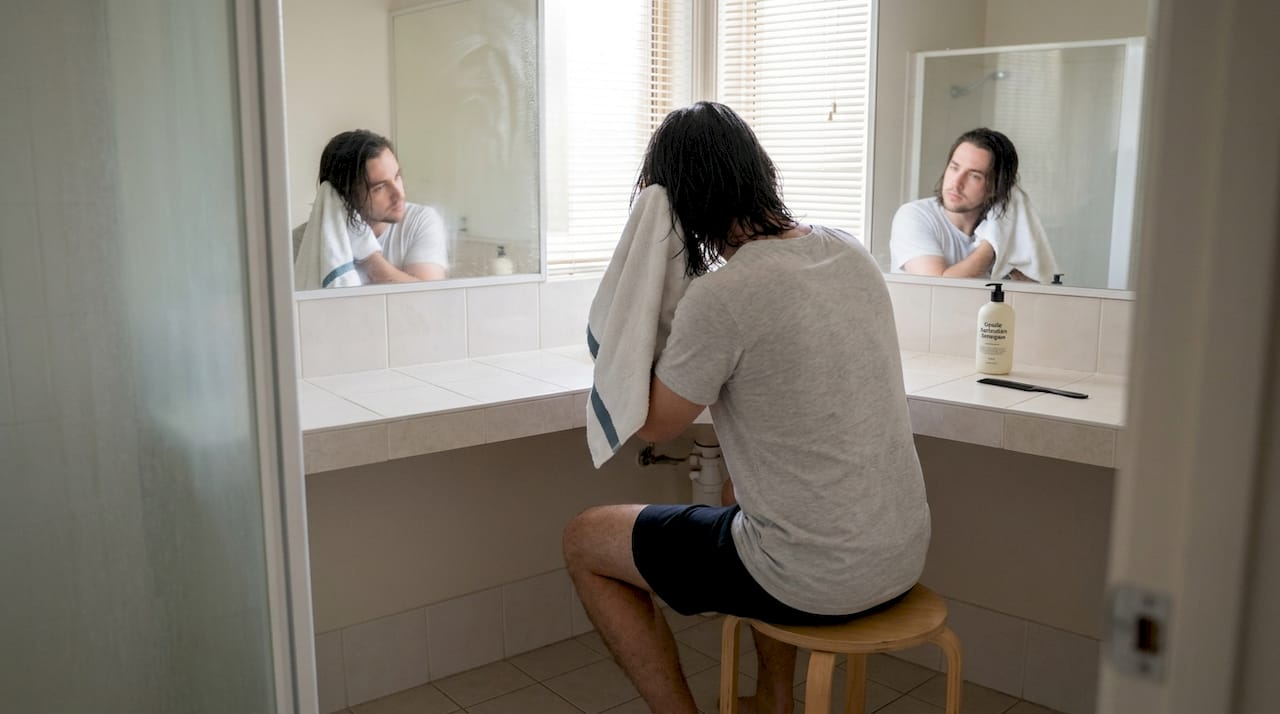
Here is what filtered shower water can do for your routine:
Skin benefits:
- Reduced redness and irritation, particularly for sensitive or eczema-prone skin
- Better absorption of serums and moisturisers after cleansing
- Less tightness and dryness post-shower
- Calmer skin barrier over consistent use
Hair benefits:
- Reduced frizz and improved smoothness
- Less scalp flakiness and irritation
- Softer, more manageable hair texture
- Improved colour retention for colour-treated hair
Shower filters with KDF and carbon are the most effective option for hot water environments, with quality systems reducing chlorine by 90 to 100%. Pairing filtered water with the right post-shower habits, like using a gentle microfibre hair towel to reduce friction, compounds the benefit further. You can also support reducing hair dryness with targeted scalp care alongside your filter.
Now that you know how filtration relates to beauty goals, it is time to see which filter types deliver real results for Australian homes.
Types of water filters: Which is best for skincare and haircare?
Not all filters are built for the same purpose. Choosing the wrong type means spending money on a system that does not address your actual beauty concerns. Here is a direct comparison:
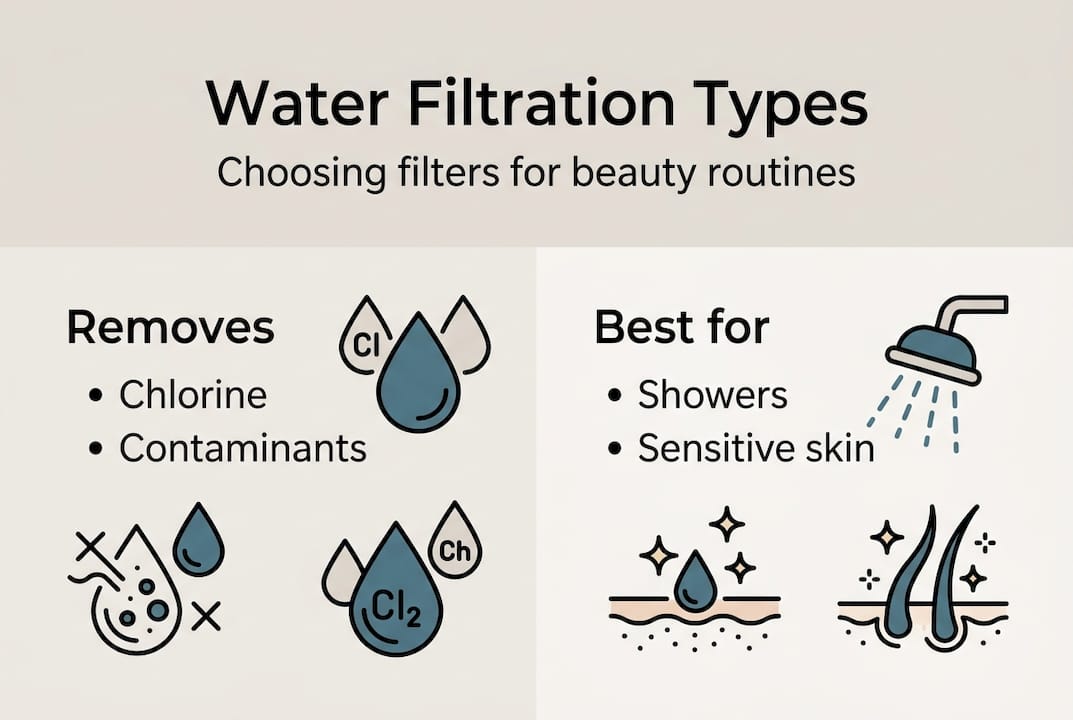
| Filter type | What it removes | Beauty suitability | Performance standard |
|---|---|---|---|
| Pitcher filter | Chlorine, some metals | Low (drinking only) | Drinking water performance standards |
| Under-sink filter | Chlorine, metals, sediment | Low (drinking only) | Drinking water performance standards |
| Reverse osmosis | 95-99% of dissolved solids | Low (not for showers) | Reverse osmosis performance standard |
| KDF/carbon shower filter | Chlorine, chloramines, metals | High (ideal for skin/hair) | Shower filter performance standard (lab-tested, hot water conditions) |
| Whole-home filter | Sediment, chlorine | Moderate (broad coverage) | Varies by manufacturer |
As performance benchmarks confirm, RO systems remove 95 to 99% of heavy metals but are not suitable for shower use. KDF/carbon shower filters are the validated choice for high chlorine removal in hot water conditions.
How to choose the right filter for your routine:
- Identify your primary concern. Dry skin and frizzy hair point directly to chlorine and mineral residue. A shower filter addresses both.
- Check your water report. Most Australian councils publish annual water quality data. Look for chlorine levels and hardness ratings.
- Match the filter to the application. Shower use requires KDF or carbon rated for hot water. Drinking use suits under-sink or RO systems.
- Verify performance testing. Look for shower filters with published lab test results that document chlorine removal rates. Do not accept unverified claims — ask to see the data.
- Consider a bundle. A KDF/carbon shower filter paired with an all-in-one water wellness bundle gives you layered coverage across your routine.
Pro Tip: For Australian showers, prioritise multi-stage KDF/carbon filters with published, independently verifiable lab test results. Performance testing specific to high-temperature, high-flow shower conditions is what matters — not marketing language.
Armed with a shortlist of filter options, you can go further by personalising choices for your home and routine.
How to maximise the benefits of your water filter
Installing a filter is the first step. Getting consistent results from it requires a bit more attention. Here is a practical process to follow:
- Test your local water first. Order a home water test kit or download your council’s water quality report. Knowing your baseline chlorine and hardness levels helps you track improvement and choose the right filter stage.
- Install and flush the filter correctly. Most shower filters require an initial flush of 2 to 5 minutes to clear manufacturing residue and activate the filter media. Skipping this step can affect early performance.
- Replace cartridges on schedule. Filter media becomes saturated over time and loses effectiveness. Most shower filter cartridges need replacing every 4 to 6 months depending on usage and local water quality. You can replace filter cartridges easily without tools in most modern systems.
- Watch for signs of filter fatigue. If your hair starts feeling drier again, your skin feels tight post-shower, or you notice a faint chlorine smell returning, your cartridge is likely exhausted. Do not wait for the smell to become strong.
- Avoid very hot showers. Beyond the obvious skin-drying effect, hot water reduces carbon efficacy in filtration media. Warm rather than scalding water preserves both your filter’s performance and your skin barrier.
Pro Tip: Set a recurring reminder every 4 months to check your filter cartridge. Consistent replacement is what delivers consistent beauty results. A filter that is overdue by weeks is barely filtering at all.
One important clarification: shower filters reduce chlorine and certain contaminants effectively, but they do not fully soften hard water. If you are in a high-hardness area, a shower filter will still make a meaningful difference to chlorine-related dryness and irritation, but mineral deposits may still be a factor. RO is not a practical solution for showers, so KDF/carbon remains the best available option.
With everything in place, you will find that how you filter water matters as much as what you filter. But what is the expert reality on claims and beauty gains?
The real beauty impact of water filtration: What experts get wrong
Most beauty content on water filtration falls into one of two camps. Either it dismisses filters entirely as unnecessary, or it overclaims that filtered water will transform your skin and hair overnight. Neither position is accurate.
The science is more nuanced. Filtered water reduces irritants but does not fundamentally soften water or change its mineral composition in the way a water softener does. What it does do is remove the chemical stressors, primarily chlorine and chloramines, that degrade your skin barrier and hair cuticle with every shower.
The “super-hydrated hair” narrative that circulates in beauty communities is also misleading. Hair does not benefit from more water absorption. It benefits from less cuticle disruption. Filtered water reduces the swelling and contraction cycle that weakens the hair shaft over time. That is a structural benefit, not a hydration benefit.
What we observe consistently is incremental improvement, not dramatic transformation. Skin feels less tight after two weeks. Hair becomes more manageable after a month. Colour-treated hair holds its tone longer. These are real, measurable changes, but they require consistent filter use and proper cartridge maintenance to sustain.
For a direct comparison of shower filter results across leading Australian options, the differences in filtration stages and documented removal rates matter more than aesthetics or price alone. Focus on what the filter actually removes, and how that is verified.
Enhance your beauty routine with Australian lab-tested shower filters
If this guide has clarified one thing, it is that the right shower filter is not a luxury add-on. It is the foundation of an effective beauty and wellness routine.
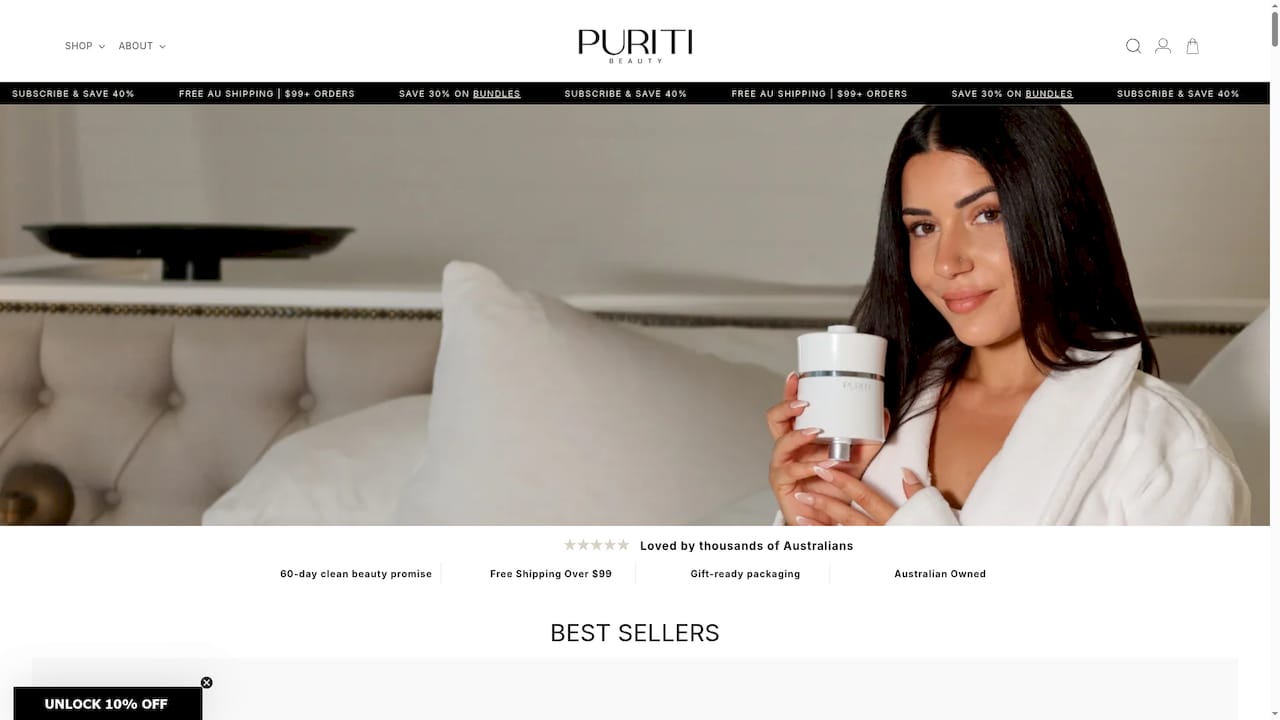
PURITI’s shower filter uses a 5-stage KDF/carbon filtration system that removes 99.55% of chlorine from shower water — lab-tested with results published publicly. Built from aluminium titanium alloy and designed for premium bathrooms, it is engineered specifically for Australian water conditions. Explore the full shower range or start with the wellness bundle to build a complete water wellness routine from the ground up.
Frequently asked questions
Does a water filter make tap water softer for hair and skin?
No, most filters do not remove water hardness. They primarily reduce chlorine and irritants that affect how your hair and skin feel, rather than altering mineral content.
How often should I replace my shower filter cartridge?
The best shower filters are designed to last 4 to 6 months before the cartridge needs replacing — that's the benchmark to look for when comparing options. Filters that require replacement every 3 months are less cost-effective over time and add unnecessary maintenance. When shopping, look for a filter with a cartridge lifespan of up to 6 months, which balances consistent performance with better long-term value. Replacement intervals can vary with usage and local water quality, so check your product guidelines for the most accurate schedule.
Is filtered water actually better for skin and hair than regular tap water?
Yes. Filtered water reduces dryness and frizz by removing chlorine and certain contaminants, making it significantly gentler on both skin and hair with consistent use.
Can I just use a drinking water filter for my shower?
No. Drinking water filters are not designed for hot water or shower flow rates. KDF/carbon shower filters are specifically engineered to perform under the high-temperature conditions of a shower environment.


