


QUICK LINKS

Protect your skin and hair from shower water contaminants
TL;DR:
- Shower water contains contaminants that can harm skin and hair through prolonged exposure.
- Installing multi-stage filters and regular cleaning improves water quality for beauty health.
- Regulatory standards focus on drinking safety and overlook dermal and inhalation risks during showering.
Your tap water is tested and approved as safe to drink, so your shower should be fine too, right? Not quite. Australian drinking water guidelines are designed around ingestion, not the prolonged skin and scalp exposure that happens every time you step under a hot shower. The steam, heat, and direct contact involved in showering create an entirely different set of concerns, particularly for anyone serious about their skin and hair health. Understanding what’s actually in your shower water, and how it interacts with your body, is one of the most overlooked steps in a modern beauty routine.
Table of Contents
- Common shower water contaminants and their effects
- ADWG standards vs. beauty needs: Why shower exposure is different
- How to minimise shower water contaminants for healthier skin and hair
- Signs your beauty routine is affected by shower water contaminants
- Our take: Why beauty-focused water care matters more than guidelines suggest
- Take action: Transform your shower for visible beauty benefits
- Frequently asked questions
Key Takeaways
| Point | Details |
|---|---|
| Contaminants impact beauty | Microbes, chlorine, and hard water in showers can visibly harm skin and hair health. |
| Shower exposure differs | Australian water standards focus on drinking safety, not dermal or inhalation risks. |
| Filtration is effective | Quality shower filters remove up to 99% of chlorine and metals, supporting your beauty goals. |
| Routine maintenance matters | Regular cleaning and monitoring water helps prevent biofilms and reduces bacterial risks. |
| Noticing symptoms | Dryness, irritation, and brittle hair after showers can signal water contamination. |
Common shower water contaminants and their effects
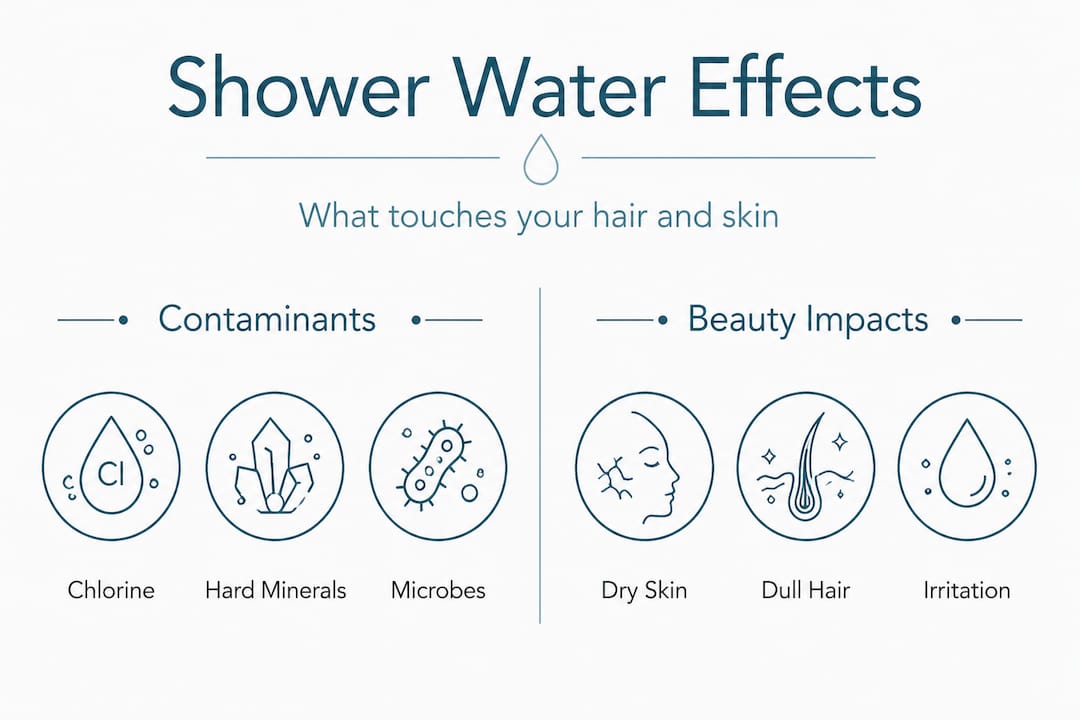
Having set the context for why shower water matters, let’s break down the types of contaminants present and their direct beauty impacts. The water filtration and beauty connection is more direct than most people realise, and it starts with knowing what you’re actually showering in.
Microbial contaminants
Bacteria are not just a drinking water concern. Microbial contaminants including Legionella, mycobacteria, and Pseudomonas are known to form biofilms inside showerheads and become aerosolised in steam. When you breathe in that steam or it settles on your skin, you’re getting direct exposure to these organisms. Biofilms thrive in the warm, moist environment of a showerhead, especially in fittings that sit unused for even a few days.
Pseudomonas aeruginosa is particularly relevant for skin because it is associated with folliculitis, a condition where hair follicles become inflamed and infected. If you’ve noticed persistent small pimples or itchy bumps on your scalp, back, or shoulders after showering, your showerhead’s microbial load could be contributing.
Chemical contaminants: Chlorine and disinfection byproducts
Chlorine is added to Australian tap water as a disinfectant, and at trace levels it does an important job. But when you’re showering in it daily, the effects accumulate. Chlorine above 1 mg/L is directly linked to skin dryness, barrier disruption, and hair brittleness. The problem is that most Australian tap water sits within or close to that threshold, and hot water accelerates chlorine’s interaction with your skin and hair.
Beyond free chlorine, the disinfection process produces byproducts called trihalomethanes (THMs) and haloacetic acids. These form when chlorine reacts with organic matter in the water. They vaporise readily in hot shower steam, meaning inhalation exposure in a small bathroom with poor ventilation can be significant. These are not beauty-friendly compounds.
Hard water minerals
Hard water is defined as water with a total dissolved solids (TDS) concentration that includes elevated calcium and magnesium. Water hardness above 120 mg/L creates noticeable effects on skin and hair texture over time. In Australia, hardness varies considerably by region. Perth’s water is notoriously hard, while Melbourne’s tends to be softer.
Hard water leaves mineral deposits on both hair shafts and skin. On hair, this creates a film that makes it harder for moisture and conditioning treatments to penetrate. On skin, it can interfere with the lather and rinse cycle, leaving residue that contributes to congestion and dryness.
| Contaminant | Primary source | Beauty impact | Threshold of concern |
|---|---|---|---|
| Chlorine | Water treatment | Skin dryness, hair brittleness | Above 1 mg/L |
| Hard water minerals | Geology/pipes | Dull hair, dry skin, blocked pores | Above 120 mg/L |
| Legionella bacteria | Showerhead biofilms | Skin and respiratory exposure | Any detectable level |
| THMs (trihalomethanes) | Chlorine byproducts | Inhalation exposure via steam | Regulated but not zero |
| Pseudomonas | Biofilm in fittings | Folliculitis, scalp irritation | Any detectable level |
The table above shows that no single contaminant tells the full story. Your skin and hair are dealing with a combination of these factors every day.
ADWG standards vs. beauty needs: Why shower exposure is different
Now that you’re familiar with the main shower contaminants, let’s explore why the official standards may not go far enough for beauty routines.
The Australian Drinking Water Guidelines (ADWG) are the national benchmark for water quality. They set maximum contaminant levels based on what is considered safe to ingest over a lifetime. However, ADWG deems tap water safe for ingestion without addressing dermal or inhalation exposure specific to showering. This is not a flaw in the guidelines so much as a matter of scope. They were designed for drinking safety, not for the needs of someone concerned about their complexion and the condition of their hair.
The distinction matters because the body interacts with water differently depending on the route of exposure:
- Ingestion involves the digestive system filtering and processing contaminants before they reach the bloodstream.
- Dermal absorption allows some compounds, particularly chlorine and its byproducts, to pass through the skin barrier directly, especially when pores are open in warm water.
- Inhalation of steam in an enclosed shower space delivers vaporised chlorine and THMs directly to the lungs, bypassing much of the body’s natural filtration.
“The skin is the largest organ in the body, and hot showers increase its permeability. When pores open under warm water, contaminants have a far easier path to interact with your skin barrier. This is not a risk the ADWG was designed to address.”
For someone who showers once a day, that’s 365 exposures per year. Multiply that by the concentration of chlorine, the hardness of your local water, and the heat of your shower, and you start to understand why standard drinking water safety measures don’t fully capture the picture for beauty-conscious women.
When comparing shower filter options, it’s worth recognising that the gap between regulatory compliance and optimal beauty outcomes is exactly what good filtration is designed to close.
| Exposure route | Relevant standards | Beauty concern addressed? |
|---|---|---|
| Drinking/ingestion | ADWG regulated | Yes, for health |
| Dermal absorption | Not specifically regulated | No |
| Steam inhalation | Not specifically regulated | No |
The evidence is straightforward. Regulatory compliance and beauty-optimised shower water are two different things, and the ADWG achieves the first without necessarily achieving the second.
How to minimise shower water contaminants for healthier skin and hair
Let’s shift focus from what’s in your shower water to straightforward ways you can improve it for better skin and hair.
Install a quality shower filter
The most direct solution is a shower filter that specifically targets the contaminants most relevant to skin and hair. Filtration media like KDF-55, activated carbon, and calcium sulfite are each capable of reducing chlorine by 95 to 99 percent. The best filters use multiple stages so that different contaminants are addressed by the most appropriate media at each stage. A single-stage filter may handle chlorine reasonably well but miss heavy metals, sediment, or scale.
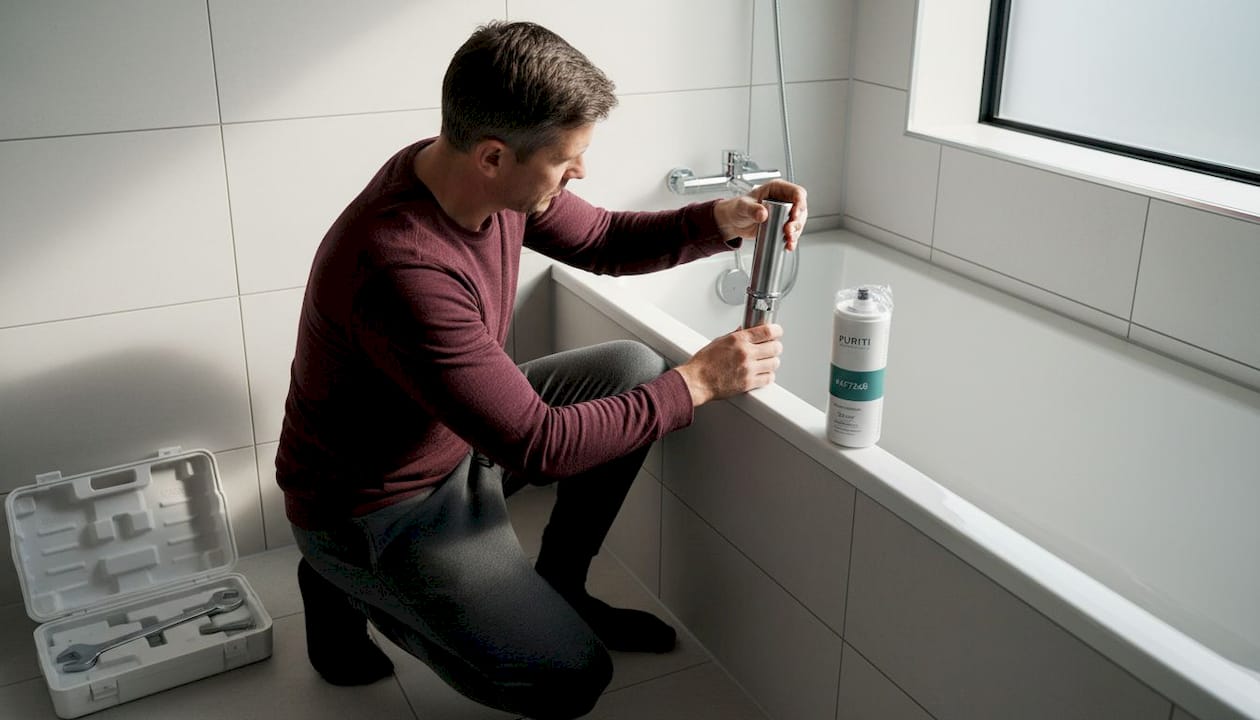
When you look at an independently tested shower filter for chlorine removal, look for lab-published results rather than marketing claims. The difference between a $15 filter and a performance-tested filter with published data is measurable in water quality outcomes and visible in skin and hair condition over time.
A refillable shower filter cartridge is also an important consideration for maintaining performance. Filtration media becomes saturated over time and needs replacing, typically every three to six months depending on usage and water hardness in your area. A filter that isn’t replaced on schedule performs progressively worse, and you may not notice until your skin and hair start showing signs again.
Clean your showerhead weekly
Biofilm is a genuine issue and one that a filter alone doesn’t fully address. The showerhead itself needs regular attention. Soaking your showerhead in undiluted white vinegar for 30 to 60 minutes once a week disrupts mineral deposits and breaks down the protective matrix that bacteria use to form biofilms. This is especially important if you live in a hard water area where scale builds up quickly.
Hot water above 50°C run through your system for several minutes is effective at controlling Legionella and reducing the viability of other bacterial species. If your shower or hot water system has been sitting unused, running hot water through it before stepping in is a simple habit worth adopting.
Test and monitor your local water
Australian water hardness and chlorine levels vary by location and can also shift seasonally. Many local water utilities publish annual water quality reports that include hardness and chlorine data for your postcode. Knowing your baseline helps you understand what level of filtration you actually need and whether hard water minerals are a significant factor for you specifically.
Key actions at a glance:
- Install a multi-stage shower filter with lab-tested chlorine removal
- Replace filter cartridges every three to six months, or per manufacturer guidance
- Soak your showerhead in white vinegar weekly to control biofilm and scale
- Run hot water through a little-used shower before using it
- Check your local water utility’s annual report for hardness and chlorine data
- Ventilate your bathroom during and after showering to reduce steam exposure
Pro Tip: If you’ve recently moved to a new area or noticed changes in your skin and hair condition that you can’t explain, testing your local water hardness is a quick, affordable first step. Test strips for hardness and chlorine are available at most hardware stores or online.
Signs your beauty routine is affected by shower water contaminants
Once you start improving your shower water, it’s important to notice signs of change or lingering issues. The effects of contaminants on skin and hair are often gradual, which means many women attribute them to product failure, hormonal changes, or diet rather than water quality.
Chlorine above 1 mg/L and hard water above 120 mg/L are both associated with a recognisable cluster of symptoms. Knowing what to look for means you can act sooner and distinguish between a product problem and a water problem.
Signs your skin may be affected:
- Persistent dryness or tightness immediately after showering, even when using a good moisturiser
- Itchiness or mild redness without an obvious allergic trigger
- Breakouts along the hairline, shoulders, or back that don’t respond to topical treatments
- A feeling of residue on the skin after rinsing, particularly in hard water areas
Signs your hair may be affected:
- Brittleness, increased breakage, or split ends that worsen despite quality conditioning treatments
- Dullness and lack of shine, even on freshly washed hair
- Frizz that is disproportionate to humidity levels
- Hair colour fading significantly faster than expected between salon visits, since chlorine is oxidising and actively strips colour molecules from the hair shaft
Pro Tip: To quickly test whether water is affecting your hair, apply a leave-in conditioner immediately after towel-drying with a gentle hair towel and observe whether texture and shine improve compared to your usual routine. If they do, your water is likely stripping moisture that your products then have to compensate for.
The key insight here is that no amount of premium skincare or haircare product will fully compensate for compromised shower water. You’re applying those products after every shower, but the water’s effects happen during every shower. Addressing the source is more efficient than treating the symptoms.
Our take: Why beauty-focused water care matters more than guidelines suggest
Most conversations about water quality stay in the lane of health and safety. That’s understandable. But it creates a blind spot for the millions of Australians spending significant money on skincare, haircare, and beauty treatments that are being undermined at the source.
There’s something worth naming plainly: the science behind water filtration is not new. KDF-55 media, activated carbon, and calcium sulfite have been used in water treatment for decades. What’s relatively new is the recognition that beauty outcomes, not just health outcomes, are a legitimate reason to filter your shower water. The beauty industry is catching up to what water scientists have known for years.
Where we think most guides fall short is in treating shower filtration as optional or niche. If you colour your hair, you should be filtering chlorine. If you have sensitive or reactive skin, you should be filtering chlorine. If you’ve invested in a prescription skincare routine, a quality moisturiser, or a professional haircare system, filtering your shower water is the logical foundation. It doesn’t replace those investments. It protects them.
The uncomfortable reality is that regulatory safe does not mean beauty optimal. These are different thresholds, and conflating them means accepting outcomes for your skin and hair that you don’t have to accept. Beauty-focused water care is not a luxury add-on. It’s a logical, evidence-based extension of any serious routine.
Take action: Transform your shower for visible beauty benefits
Now that you know what’s at stake, here’s how you can elevate your beauty routine with proven solutions.
PURITI’s premium shower filter removes 99.55% of chlorine and contaminants using a 5-stage filtration system, independently lab-tested with results published publicly. It’s engineered to outperform on the Australian market and built from aluminium titanium alloy, so it looks as good in your bathroom as it performs in your water.

Explore the full shower filter collection to find the right configuration for your bathroom, and pair your filter with a microfibre hair towel to reduce mechanical friction post-shower. Every element of your routine matters. Starting with cleaner water means everything that follows works better.
Frequently asked questions
What is the most harmful shower water contaminant for skin?
Chlorine is most consistently cited for causing skin dryness and barrier disruption, with noticeable dryness linked to concentrations above 1 mg/L. Hard water minerals compound this effect when both are present.
How do shower filters improve hair health?
Shower filters remove chlorine and heavy metals that strip moisture and colour from hair. Filtration media including KDF-55 and activated carbon reduce chlorine by 95 to 99 percent, resulting in less breakage and improved shine over time.
Do drinking water standards protect against shower contaminants?
No. The ADWG addresses ingestion safety and does not regulate dermal absorption or inhalation exposure during showering, which are the primary concern for skin and hair health.
What’s the best cleaning routine for showerheads?
Weekly vinegar soaking and running hot water above 50°C disrupts biofilm formation and minimises bacterial risk. This is especially important for showerheads that have been unused for several days or more.


