


QUICK LINKS

How to prolong your shower filter lifespan for better results
TL;DR:
- Proper maintenance extends shower filter lifespan, ensuring continuous removal of harmful contaminants.
- Regular checks prevent buildup, preserve water pressure, and optimize beauty benefits for hair and skin.
- Quality filters and timely cartridge replacement are essential for achieving lasting wellness and aesthetic results.
You invest in a shower filter for a reason: softer hair, calmer skin, and a beauty routine that actually works from the ground up. But what happens when that performance fades months earlier than expected? The reality is that even a high-quality filter only delivers its full potential when you care for it correctly. PURITI’s 5-stage filtration system removes 99.55% of chlorine from Australian shower water, and keeping it running at that level takes more than just installing it and walking away. This guide gives you the exact steps to extend your filter’s lifespan and protect your beauty results.
Table of Contents
- Why filter lifespan matters for your beauty routine
- What you need: Essential tools and preparation
- Step-by-step: How to maintain your shower filter for maximum lifespan
- Troubleshooting and common mistakes to avoid
- How to tell when your filter needs replacing
- Our take: What most guides miss about filter care and beauty benefits
- Level up your beauty routine with advanced filtration
- Frequently asked questions
Key Takeaways
| Point | Details |
|---|---|
| Consistent maintenance matters | Regular cleaning and checks greatly extend your shower filter’s life and benefits. |
| Know the warning signs | Decreased water flow, odd smells, or residue mean it’s time for filter care or replacement. |
| Right tools make it easier | Having proper cleaning tools and reminders helps you stick to a filter care routine. |
| Quality filters boost results | Investing in well-designed filters maximises hair and skin wellness. |
Why filter lifespan matters for your beauty routine
Most people think about water quality in terms of drinking water. Far fewer consider what their shower water is doing to their hair and skin every single day. Australian tap water is treated with chlorine and chloramines to meet safety standards, but those same chemicals strip the natural oils from your scalp, weaken hair protein bonds, and disrupt the skin’s moisture barrier over time.
When your shower filter is working at full capacity, it intercepts those chemicals before they reach your body. The results are measurable: softer hair texture, reduced scalp irritation, and skin that stays hydrated instead of feeling tight after a shower. Understanding water filtration and beauty science helps explain why these effects are so consistent across different skin and hair types.
Here is what a well-maintained filter actively protects against:
- Chlorine and chloramines that dry out hair and irritate sensitive scalps
- Heavy metals including lead and copper that can accumulate in hair and on skin
- Sediment and particulates that clog pores and dull hair’s natural shine
- Volatile organic compounds (VOCs) that contribute to dryness and irritation
“A consistently performing filter is what separates a beauty upgrade from a short-lived experiment. The moment filtration drops below optimal, your hair and skin start absorbing the contaminants you paid to block.”
When filter media becomes saturated, it can no longer bind to or neutralise these contaminants effectively. You may not notice the shift immediately, but over several weeks, hair becomes drier, colour-treated hair fades faster, and skin may show more congestion or sensitivity. Using a fresh filter consistently removes chlorine and impurities that directly harm your hair and skin, which means maintaining that effectiveness is not optional if you want results you can see.
Prolonging your filter’s lifespan also has a practical financial benefit. Replacing cartridges on a schedule you control, rather than reactively after performance drops, costs less over time and generates less waste.
What you need: Essential tools and preparation
With the ‘why’ established, the next step is making sure you have everything in place before you start your maintenance routine. Being prepared means you will actually follow through instead of putting it off.
| Tool | Purpose | Recommended frequency |
|---|---|---|
| Soft cloth or sponge | Wipe down filter housing | Monthly |
| Non-corrosive cleaner | Remove mineral deposits | Monthly |
| Filter manual or guide | Reference for model-specific care | As needed |
| Replacement cartridge (spare) | Immediate swap when needed | Keep one on hand |
| Calendar or phone reminder | Track cleaning and replacement schedule | Set once |
| Water pressure gauge | Monitor for flow changes | Every 2 to 3 months |
Having these tools ready removes the friction that causes most people to skip maintenance. A replacement cartridge kept on hand is particularly important because it means you are never caught in a gap period where you are showering without effective filtration.
Regular filter maintenance can delay replacement and enhance performance, which is the most direct way to get more value from your investment.
A few additional items worth having nearby:
- A small adjustable wrench wrapped in a soft cloth (to avoid scratching the housing)
- White vinegar solution for gentle descaling of the exterior (never the internal media)
- A notepad or app to log maintenance dates
Pro Tip: Pair your filter care routine with another monthly habit you already have, such as cleaning your shower screen or washing your microfibre hair towel. Habit-stacking makes the routine automatic rather than something you need to remember separately.
Step-by-step: How to maintain your shower filter for maximum lifespan
Preparation sorted, here are the exact steps to get the most life and beauty results from your shower filter. Consistency matters more than effort here. A light routine done regularly outperforms an intensive clean done once every six months.
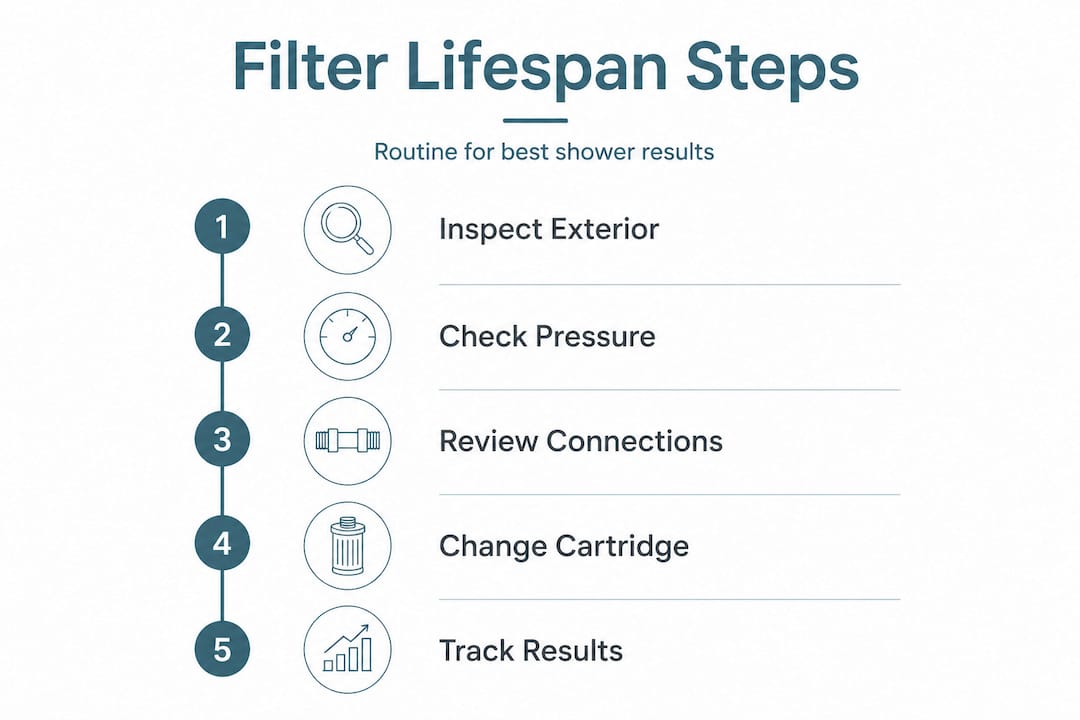
Step 1: Inspect the exterior monthly Run a soft cloth over the filter housing. Look for mineral scale deposits, which appear as white or grey chalky residue. These build up faster in areas with hard water. Wipe them away with a damp cloth and a small amount of non-corrosive cleaner.
Step 2: Check water flow pressure A simple but effective indicator of filter health is water pressure. If you notice a gradual reduction in flow, this suggests the filter media or pre-filter screen is accumulating sediment. Note any changes and compare against your baseline.
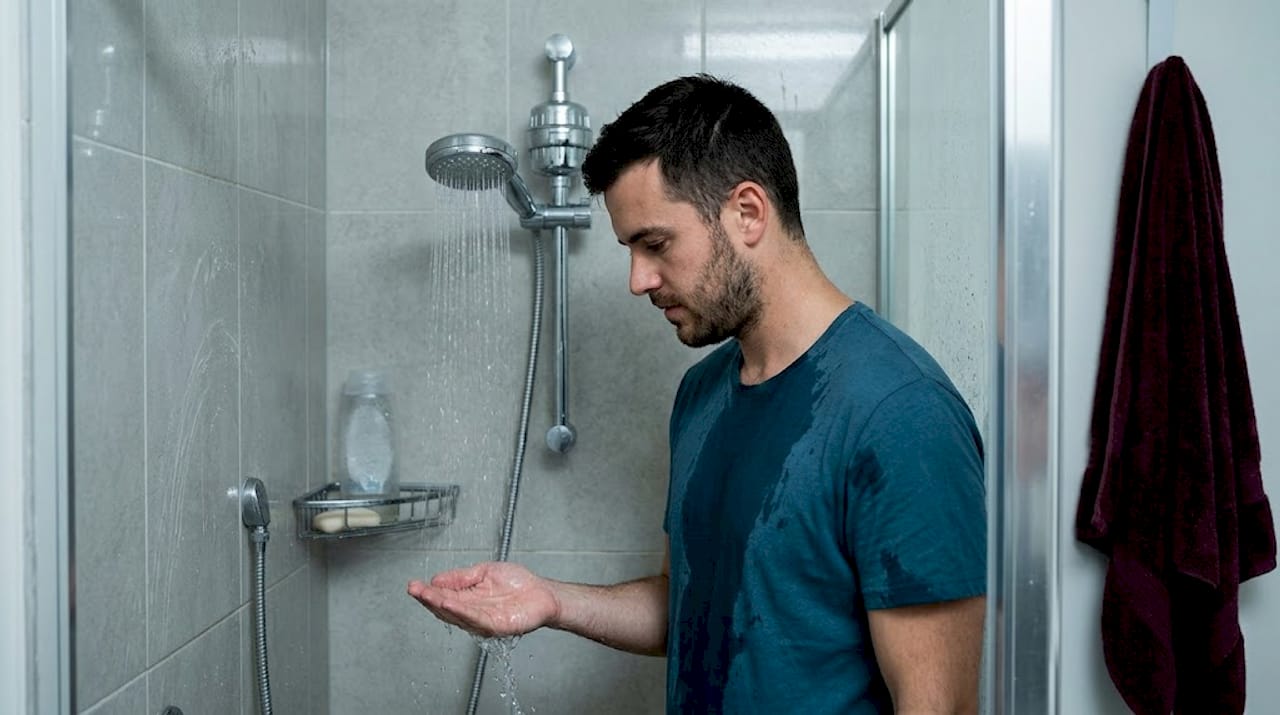
Step 3: Inspect the connection points Loose or corroded connections can introduce air into the system and reduce filtration efficiency. Check that the filter is seated firmly on the shower arm without over-tightening, which can crack the housing.
Step 4: Replace the cartridge on schedule Replacing or cleaning cartridges at set intervals maintains optimal performance. Do not wait for visible signs of failure. For most Australian households, this means every six months, though high usage or poor water quality may require more frequent changes.
Step 5: Use a scalp brush to monitor results Monitoring your hair and scalp health is a practical way to track whether your filter is working. A scalp and hair brush used consistently helps you notice when your scalp feels more irritated or your hair seems drier, both of which can signal filter decline.
| Maintenance task | Frequency | Time required | Difficulty |
|---|---|---|---|
| Exterior wipe-down | Monthly | 5 minutes | Easy |
| Water pressure check | Every 2 to 3 months | 2 minutes | Easy |
| Connection inspection | Every 3 months | 5 minutes | Easy |
| Cartridge replacement | Every 6 months | 10 minutes | Easy |
| Full housing clean | Every 6 months | 15 minutes | Moderate |
Pro Tip: Avoid using abrasive scrubbers, steel wool, or harsh chemical sprays directly on the filter housing or any component connected to the media inside. These can degrade seals and allow unfiltered water to bypass the filtration stages entirely.
Troubleshooting and common mistakes to avoid
Understanding steps is important, but mistakes can undo your efforts. Here are the most common errors and how to correct them before they affect your results.
Common mistakes that shorten filter life:
- Skipping monthly checks because the filter appears to be working fine. Performance decline is gradual and not always obvious until significant damage is done.
- Using abrasive or chemical cleaners on the filter body. These can erode seals and compromise the structural integrity of the housing.
- Over-tightening during installation or cartridge swaps. This stresses the threads and connections, leading to micro-cracks that allow water to bypass filtration.
- Ignoring changes in water odour or taste (if you have a bath tap filter). A chlorine smell returning to your shower is a direct signal that the media is saturated.
- Assuming all filters perform the same way over time. Build quality and media composition vary significantly. Understanding how different filters compare helps you set realistic expectations. You can compare shower filter types to see how design differences affect longevity.
“A decrease in water flow or a change in water odour signals that a filter may be clogged or spent. Acting on these signs promptly prevents a gap in your filtration coverage.”
Warning signs that need immediate attention:
- Persistent chlorine smell during or after showering
- Visible rust-coloured or discoloured water
- Sudden drop in water pressure that cannot be explained by household supply issues
- White or chalky residue accumulating faster than usual on the filter housing or shower fittings
- Increased scalp irritation, dryness, or hair breakage after previously clear skin and hair
Responding to these signals quickly means you avoid spending weeks showering in water that is no longer being adequately filtered.
How to tell when your filter needs replacing
Now that you know how to avoid mistakes, let’s look at clear, measurable signals that tell you it is time for a new cartridge.
- Chlorine odour returns. If your shower starts smelling like a swimming pool again, the activated carbon and KDF-55 media inside the cartridge are saturated and no longer reacting with chlorine.
- Water pressure drops noticeably. Sediment accumulation inside the filter restricts flow. This is one of the most reliable early indicators.
- Residue builds up on shower fittings more quickly. When the filter is no longer removing minerals effectively, limescale appears faster on chrome fittings and glass screens.
- Hair and scalp changes. Returning frizz, dryness, or scalp sensitivity after a period of improvement suggests filtration is declining.
- Six months have passed. Even without obvious symptoms, replacement is usually required every six months, and high usage or poor local water quality may demand earlier attention.
A note on Australian water quality: Water hardness and chlorine levels vary significantly across states and regions. Households in areas with harder water or higher chlorine treatment levels will typically see filter media saturate faster. If you are in a high-chlorine zone, consider replacing your cartridge at four to five months rather than waiting for the six-month mark.
Delaying replacement past the point of saturation is a direct trade-off against your beauty results. The hair wellness bundle is a practical way to support your routine during the transition period between cartridges, giving your hair extra care while you complete the switch.
Callout: Ignoring the need for replacement does not just reduce filtration efficiency. It can actively undermine the investment you have made in your broader beauty and wellness routine.
Our take: What most guides miss about filter care and beauty benefits
Having covered the practical steps, it is worth addressing something most filter care guides avoid entirely.
The majority of maintenance guides treat all shower filters as functionally equivalent. They assume the advice is universal. It is not. Build quality and media composition are the two factors that most directly determine how long a filter performs at its rated capacity. A filter housed in low-grade plastic with a single-stage media will degrade differently and faster than one built from aluminium titanium alloy with five stages of filtration. The physical construction matters as much as the maintenance routine.
Here is what that means in practice: if you are following every maintenance step correctly but still seeing performance decline earlier than expected, the issue may not be your routine. It may be what you are working with. Understanding the science behind beauty filtration gives you the framework to assess whether your filter’s design is actually capable of delivering the results you want.
The second thing most guides miss is the connection between filter neglect and beauty outcomes that are easy to misattribute. Increased breakouts, dull hair, and scalp flare-ups are frequently blamed on skincare products or diet when the actual cause is a spent shower filter exposing skin to chlorine and sediment every day. This is a practical, solvable problem that most people never identify because the link is not obvious.
The most effective habit change you can make is coupling your filter care schedule with your existing hair-washing routine. If you wash your hair three times per week, use those sessions as a cue to observe your hair texture and scalp condition. Monthly, use wash day to also check your filter housing. This habit-stacking approach removes the need for separate reminders and keeps your routine self-reinforcing rather than reactive.
Level up your beauty routine with advanced filtration
If you want your filter care routine to feel effortless and deliver the best possible beauty results, the next step is straightforward.

PURITI’s shop shower filters collection is built specifically for Australian water conditions, with independently lab-tested performance you can verify. Every filter in the range is designed to sit beautifully in a premium bathroom while doing serious work on your water quality. Pairing the right filter with a consistent maintenance routine is how you turn a one-off purchase into a sustained beauty and wellness outcome.
When it is time to replace your media, PURITI’s official replacement cartridges are engineered to restore your filter to full performance in minutes. For those starting fresh, the advanced chlorine-removal filters offer the full five-stage system with a performance guarantee backed by publicly available lab results. Your water quality should never be a guessing game.
Frequently asked questions
How often should I clean my shower filter to keep it effective?
Clean your shower filter monthly to prevent mineral and sediment build-up, which helps prolong performance and delay replacement between cartridge changes.
Can I use vinegar or other household cleaners on my shower filter?
Stick to non-corrosive cleaners and diluted white vinegar only on the exterior housing. Always check your filter’s manual before choosing any cleaning solution, as some media types are sensitive to acidic exposure.
What are signs that my shower filter needs replacing?
Decreased water pressure, a returning chlorine odour, or increased residue on shower fittings are the clearest signals. A decrease in water flow specifically indicates the filter media may be clogged or spent.
Does the type of water in my area change how often I need to replace my filter?
Yes. Hard water or high chlorine levels in your region saturate the filter media faster, which may require replacement at four to five months rather than the standard six-month interval.
Can a filter really improve my hair and skin?
Effective filtration consistently removes impurities from shower water that directly harm hair structure and skin hydration, making it one of the most impactful changes you can make to your daily beauty routine.


