


QUICK LINKS

How to test shower water quality for better hair and skin
TL;DR:
- Shower water quality, including chlorine and hardness, significantly impacts skin and hair health.
- Visual and sensory cues can help identify potential water issues before testing.
- Regular testing and using filters can improve beauty outcomes by addressing aesthetic water contaminants.
Your shampoo is expensive. Your moisturiser is top-shelf. Yet your hair still feels brittle after washing, your scalp itches, and your skin seems drier than it should be. Before you blame your products, consider the water you’re washing with. Shower water quality is one of the most overlooked factors in any beauty routine, and most Australian women are never told to check it. This guide walks you through the practical steps to test your shower water at home, interpret what the results mean, and take targeted action based on real evidence.
Table of Contents
- Why shower water quality matters for your hair and skin
- What to look for before testing: visible and sensory clues
- How to test your shower water at home: step-by-step
- What your results mean — and what to do next
- A beauty expert’s take: why most people test wrong (and what actually works)
- Upgrade your routine with proven results
- Frequently asked questions
Key Takeaways
| Point | Details |
|---|---|
| Chlorine and hardness matter | Even if water is safe, chlorine and minerals can harm hair and skin. |
| Look, smell, test | Trust your senses and then use at-home kits for a clear water quality picture. |
| Act on results | If you spot issues, consider filters, regular testing, and sometimes a lab assessment. |
| DIY has limits | Home tests are great for screening, but persistent problems need a professional check. |
Why shower water quality matters for your hair and skin
Most people assume that because tap water is safe to drink, it’s safe for their hair and skin too. That assumption is partially correct. Australian tap water meets health safety standards the vast majority of the time, but “safe to drink” and “gentle on your skin and hair” are not the same thing. The chemicals and minerals used to treat and transport water can have a measurable impact on how your skin feels and how your hair looks after every single shower.
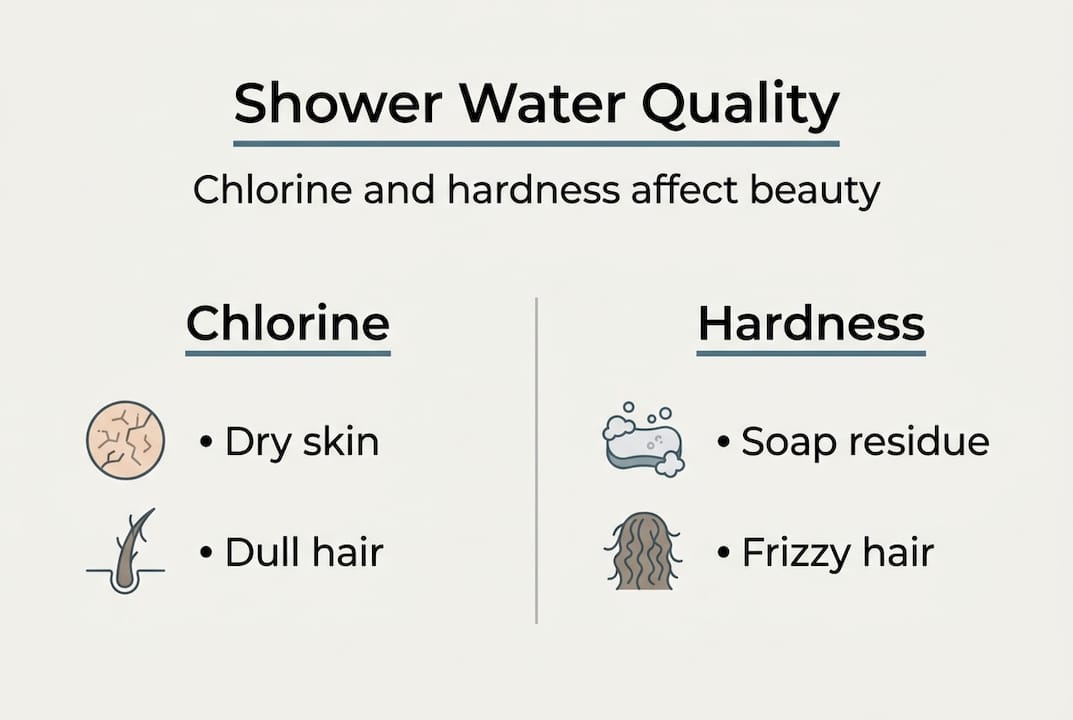
Chlorine is the most common culprit. Australian drinking water typically contains 0.5 to 2.5 mg/L of chlorine, with a maximum allowable limit of 5 mg/L under the Australian Drinking Water Guidelines (ADWG). Chlorine is added intentionally to kill bacteria and keep water safe as it travels through pipes. The problem is that chlorine does not distinguish between harmful bacteria and the natural oils that protect your skin and hair. It strips both. Hot showers make this worse because warm water opens your pores and increases the rate at which chlorine is absorbed through the skin.
Water hardness is the other major factor. Hard water contains elevated concentrations of dissolved calcium and magnesium. The ADWG does not set a health-based limit on hardness, but it does flag an aesthetic guideline of around 200 mg/L total dissolved solids (TDS). In practical terms, hard water leaves a mineral residue that builds up on your hair shaft over time, making it look dull and feel rough. Research supports this. A UK study found a 54% increase in eczema risk in children exposed to hard water, and separate PubMed research shows that chlorine measurably reduces the skin’s ability to retain moisture.
Understanding the science behind beauty water filtration can help you connect these mechanisms to what you’re experiencing in your bathroom. The key point is this: water that meets every safety standard can still be actively working against your beauty routine.
Here is a quick summary of what to watch for:
- Chlorine exposure: Strips natural oils from skin and hair, accelerates dryness, and worsens existing eczema or sensitivity
- Hard water minerals: Causes dull, weighed-down hair, leaves residue on skin, and increases the risk of flare-ups in people with sensitive skin
- Hot shower habits: Significantly increase the absorption of chlorine through the skin compared to cooler temperatures; research on cold shower benefits confirms that lower temperatures are far kinder to the skin barrier
- Pipe contaminants: Older plumbing can introduce heavy metals like lead or copper into water that otherwise meets treatment standards
Key takeaway: Safe water and beauty-friendly water are not always the same thing. Knowing your water quality gives you the ability to protect your skin and hair with precision.
With the impact understood, the next step is to identify the signs and prepare for testing.
What to look for before testing: visible and sensory clues
Before you purchase a testing kit, a simple visual and sensory check of your shower water can tell you a great deal. These observations act as an early screening tool and help you decide how urgently you need to move to formal testing. According to water quality guidelines, cloudy water, a strong chlorine or rotten-egg smell, and metallic taste are all initial indicators of potential issues, with milky cloudiness that clears within a minute or two typically being harmless air bubbles, while persistent cloudiness requires proper investigation.
Run your shower and observe the following:
- Colour: Clear is the baseline. Yellow or brown tones can indicate rust from old pipes. Green tones may point to copper leaching. Any persistent discolouration warrants testing.
- Cloudiness: A briefly milky appearance that clears within 60 seconds is usually just dissolved air escaping as water pressure changes. Cloudiness that lingers suggests sediment or other particles.
- Smell: A faint chlorine smell is common and expected in treated town water. A strong chemical odour, a rotten-egg smell (which signals hydrogen sulphide), or a musty smell are all reasons to investigate further.
- Taste: If you notice a metallic taste while rinsing your face, or your lips feel dry and slightly salty after showering, mineral content is likely elevated.
- Feel on skin: Water that leaves your skin feeling tight, slightly itchy, or coated with a thin film after rinsing off soap is a reliable indicator of hard water.
Pro Tip: Fill a clear glass with shower water and hold it up to natural light. This gives you a far better view of colour and cloudiness than looking through the water stream itself.
These clues are not a substitute for testing, but they do give you a starting point. A rotten-egg smell, for example, may indicate sulphur in bore water or from a failing hot water system. Persistent metallic residue on your skin is often a sign of elevated iron or copper. Both of these issues are worth escalating beyond DIY observation.
“The body often detects water quality issues before any instrument does. Pay attention to how your skin feels immediately after a shower. That tight, stripped feeling is data.” — common observation among dermatologists and water quality specialists
Once you have spotted any concerning clues, it is time to get hands-on with actual water testing.
How to test your shower water at home: step-by-step
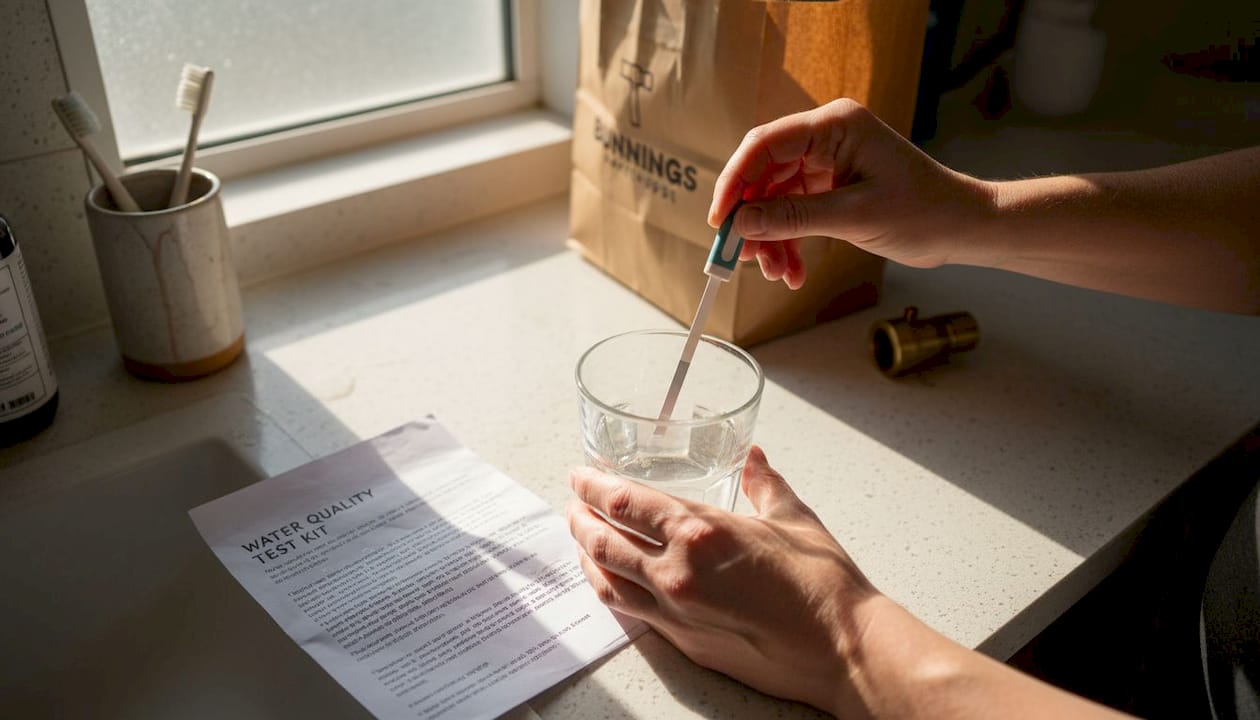
DIY water testing has become genuinely accessible in Australia. Basic test strips are widely available online and at hardware stores, and they can screen for the most common issues affecting hair and skin within minutes. For a more thorough picture, laboratory testing services are available at a moderate cost and provide detailed analysis that basic strips cannot match.
Here is what you will need to get started:
| Item | Purpose | Where to find it |
|---|---|---|
| Water test strips (multi-parameter) | Screen for chlorine, pH, hardness, and iron | Online retailers, hardware stores |
| Clean glass or sample jar | Collect an uncontaminated water sample | Kitchen cupboard |
| Notepad or phone | Record readings immediately | On hand |
| Timer | Some tests require a specific contact time | Phone timer |
Follow these steps for a reliable at-home test:
- Let the water run first. Before collecting a sample, run your shower for 30 seconds to flush any water that has been sitting in the pipes. This gives you a representative sample of what you are actually showering in.
- Collect your sample. Hold a clean glass or jar directly under the shower head. Fill it to about three-quarters full.
- Dip the test strip. Follow the manufacturer’s instructions precisely. Most strips require a 1 to 2 second dip, then 30 to 60 seconds of waiting before you read the result.
- Read and record. Compare the strip colour to the reference chart immediately. Write down the readings for chlorine, pH, hardness, and any other parameters included in your kit.
- Test at different times. Water quality can shift throughout the day and across seasons. Testing once in the morning and once in the evening, on separate days, gives you a more accurate picture.
- Repeat after plumbing changes. If you have had any work done on your pipes or hot water system, retest your water immediately. Well water, bore water, and regional water supplies are also more variable and should be tested at least once a year.
Pro Tip: Store your test strips away from humidity and direct sunlight. Bathroom storage is actually one of the worst places for them. Keep them in a sealed bag in a bedroom or hallway cupboard to preserve accuracy.
If your DIY results come back with elevated chlorine, very high hardness, or anything that does not look right, and especially if you have persistent skin irritation, it is worth escalating to a professional laboratory test. Labs can screen for pesticides, heavy metals, and bacterial content that standard strips will not detect.
| Testing method | Detects | Approximate cost | Time to results |
|---|---|---|---|
| DIY test strips | Chlorine, pH, hardness, iron | $10 to $40 | 2 to 5 minutes |
| Professional lab test | Full mineral panel, heavy metals, bacteria, pesticides | $80 to $250 | 3 to 7 business days |
Armed with results, here is how to make sense of the numbers.
What your results mean — and what to do next
Test results can feel abstract without a reference point. The table below shows the key parameters relevant to hair and skin health, the thresholds that matter, and what to do if your readings fall outside the ideal range.
| Parameter | Ideal range for beauty | ADWG guideline | Action if elevated |
|---|---|---|---|
| Chlorine | Below 0.5 mg/L | Max 5 mg/L | Install a shower filter, consider cooler showers |
| Total hardness | Below 120 mg/L as CaCO₃ | Aesthetic only, 200 mg/L TDS | Use a filter, adjust hair care routine |
| pH | 6.5 to 7.5 | 6.5 to 8.5 | Check for pipe corrosion if very low or high |
| Iron | Below 0.1 mg/L | 0.3 mg/L aesthetic | Investigate source; plumber consult if persistent |
| Copper | Below 0.1 mg/L | 2 mg/L health limit | Check pipe age, especially in older homes |
It is worth understanding an important distinction here. Australian water utilities achieve approximately 99% compliance with ADWG standards, which is genuinely excellent from a public health perspective. However, experts consistently note that aesthetic issues such as hardness and chlorine levels within the “safe” range still have a measurable impact on beauty and skin outcomes. Safe and optimal are not the same threshold.
Your response to the results should be proportional:
- Chlorine within guidelines but above 0.5 mg/L: This is the most common finding in Australian city water. The most effective and immediate solution is using a quality shower filter that removes chlorine at the point of use.
- Hard water: Filters that include KDF-55 or activated carbon media can reduce the impact of hardness, though they do not fully soften water. Consider adjusting your hair wash routine to include a chelating shampoo that binds and removes mineral build-up.
- Elevated iron or copper: This often points to older plumbing rather than the water supply itself. A plumber’s assessment is the right next step, and retesting after any repairs will confirm whether the issue has been resolved.
- Results within all ideal ranges: This is good news, but do not treat it as permanent. Test again in 12 months or any time you notice a change in how your skin or hair feels after showering.
A beauty expert’s take: why most people test wrong (and what actually works)
Most people who decide to check their shower water stop at the look and the smell. They take a sniff, decide it seems fine, and move on. The problem is that the parameters with the greatest impact on hair and skin, specifically chlorine and hardness, are almost entirely undetectable by sight or smell at the concentrations typically found in Australian tap water.
The second mistake is treating water testing as a one-time event. Water quality shifts with seasons, local infrastructure changes, and rainfall patterns. A test result from three years ago tells you very little about what is coming through your shower head today.
The third mistake is waiting until water reaches a health-based threshold before taking action. Understanding the beauty water science explained makes it clear that aesthetic thresholds, the ones regulators consider optional, are the ones that matter most to your skin barrier and hair cuticle. Act on aesthetic results, not just safety results.
Annual testing combined with a reliable shower filter gives you the most practical and evidence-based approach. Filters reduce chlorine exposure at every shower, which addresses the most consistent variable. Testing confirms whether your filter is still performing and whether any new variables, such as pipe changes or seasonal variation, have entered the picture. Neither alone is as effective as both together.
Upgrade your routine with proven results
Understanding your water quality is the foundation. The next step is acting on what you find.
PURITI’s premium shower filter removes 99.55% of chlorine and key contaminants from your shower water, independently lab-tested with results published publicly. The 5-stage filtration system is built from aluminium titanium alloy and designed for Australian water conditions. If your test results show elevated chlorine or hardness, this is the most direct and effective response. Browse all shower solutions to find the right fit for your bathroom setup and start protecting your skin and hair from the very first shower.
Frequently asked questions
How often should I test my shower water if I live in a city apartment?
Testing every one to two years is generally sufficient for city residents, as municipal water supplies are more regulated and stable. However, test after plumbing changes or if you notice any sudden shift in how your skin or hair feels.
Does hot water affect how much chlorine my skin absorbs?
Yes. Hot water increases chlorine absorption through the skin because heat opens pores and accelerates the chemical reaction between chlorine and skin tissue. Cooler showers reduce this effect.
Why test for ‘aesthetic’ issues if my water meets safety guidelines?
Because aesthetic issues like hardness and chlorine affect your skin’s moisture retention and hair condition even when water is technically safe. Safety guidelines are set for health, not for beauty outcomes.
What if shower water smells like metal or eggs?
A metallic smell often indicates elevated iron or copper from older pipes, while a rotten-egg odour points to hydrogen sulphide. Both are reasons to test promptly rather than assume the issue is minor.


