


QUICK LINKS

How to remove chlorine from your shower for healthier skin
TL;DR:
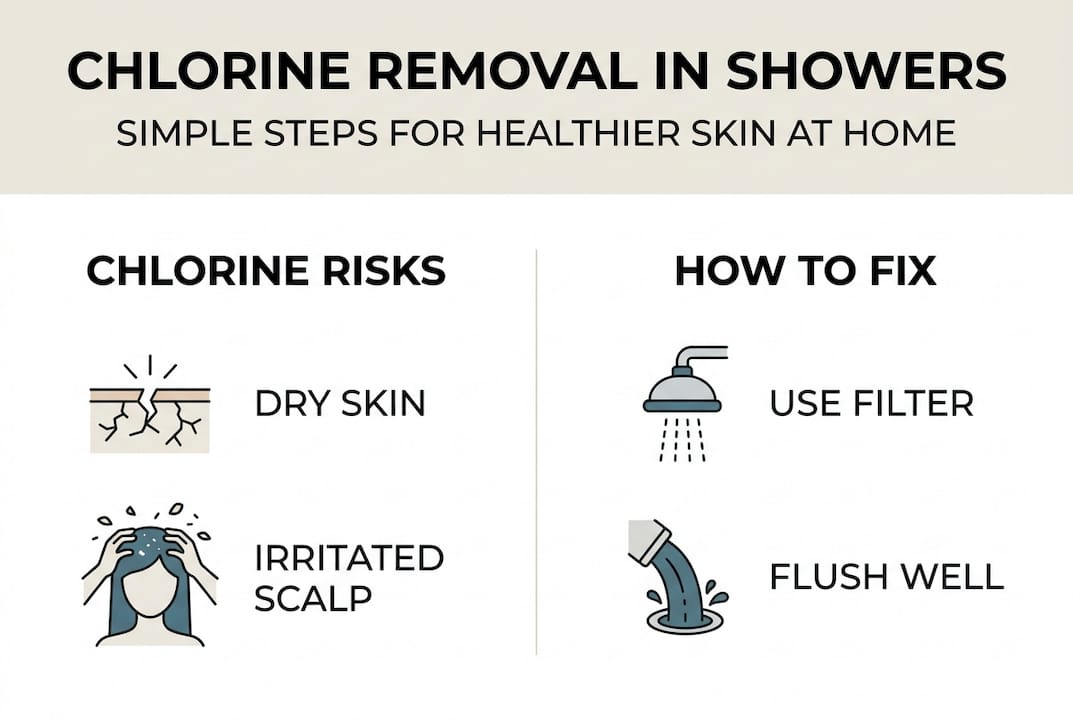
- Chlorine and chloramine in Australian tap water harm skin and hair during showers.
- Installing a multi-stage, certified shower filter effectively removes these contaminants.
- Regular filter replacements and testing ensure ongoing health benefits and optimal water quality.
Your skin feels tight after every shower. Your hair looks dull despite the expensive conditioner you use. You’ve tried new products, adjusted your routine, and still can’t pinpoint the cause. The answer might be something you’ve never considered: the water itself. Chlorine and chloramine in Australian tap water are absorbed and inhaled during every shower, and the cumulative effect on skin and hair is well documented. This guide walks you through exactly how to remove chlorine from your shower, what products work best in Australian conditions, and how to verify the results for yourself.
Table of Contents
- Why chlorine in your shower is a problem
- What you’ll need to remove chlorine from your shower
- Step-by-step: how to remove chlorine from your shower
- Troubleshooting and maximising your results
- Why most Australians under-value shower water quality (and how to change the narrative)
- Upgrade your beauty routine with premium filtration
- Frequently asked questions
Key Takeaways
| Point | Details |
|---|---|
| Chlorine harms skin and hair | Chlorine and chloramine in Australian shower water can cause dryness and dullness in hair and skin. |
| Certified shower filters work | Filters using KDF, calcium sulfite, and catalytic carbon remove up to 99% of chlorine and chloramine for real beauty benefits. |
| Simple DIY installation | Most shower filters are easy to install without tools and require changing every 3-6 months. |
| Choose for Australian water | Filters certified for both chlorine and chloramine are best for most Australian capital cities. |
Why chlorine in your shower is a problem
Australian water utilities treat tap water with chlorine and, increasingly, chloramine (a compound of chlorine and ammonia) to kill bacteria and make water safe to drink. That process is essential for public health. But the same chemistry that neutralises harmful microbes also strips the natural oils from your skin and hair during a shower.
When you step into a hot shower, your pores open and your skin becomes more permeable. Chlorine is absorbed directly through the skin and inhaled as steam, making shower exposure more concentrated than drinking treated water. The impact accumulates with every daily shower.
Common effects reported by Australian women include:
- Dry, itchy, or flaky skin that does not respond well to moisturiser
- Dull, brittle, or frizzy hair even after using premium haircare products
- Scalp irritation or dandruff triggered by chemical sensitivity
- Faded hair colour particularly in chemically treated or coloured hair
- Worsening eczema or psoriasis flare-ups linked to chemical irritants
The water filtration and beauty science behind this is clear. Chlorine disrupts the skin’s acid mantle, the thin protective film that keeps moisture in and irritants out. Once that barrier is compromised, no amount of serum or face cream fully compensates for what’s being stripped away during a 10-minute shower.
“Health-conscious women report softer skin, less dryness, and better hair shine within 1 to 2 weeks of reducing chlorine exposure in the shower.”
The chloramine issue is particularly relevant in Australian cities. Sydney, Brisbane, Melbourne, Adelaide, and Perth all use chloramine in their water supply at various times of year. Chloramine is harder to remove than standard chlorine and requires specific filter media to neutralise it effectively. Many people install a basic filter and assume the job is done, not realising their filter doesn’t address chloramine at all.
Understanding the problem is the first step. The good news is that the fix is straightforward, affordable, and does not require any plumbing expertise.
What you’ll need to remove chlorine from your shower
Now that you understand the risks, let’s look at what you’ll actually need to fix the problem.
The primary solution is an inline shower filter. This is a compact unit that connects between your existing shower arm and your showerhead. Installing an inline shower filter takes between 2 and 10 minutes with no tools required, as most models use the universal 1/2-inch thread standard found in Australian plumbing.
Not all filters are equal. The media inside the filter casing determines what contaminants are removed and at what efficiency. Here’s a breakdown of the most common filter media types:
| Filter media | Removes chlorine | Removes chloramine | Best for |
|---|---|---|---|
| Activated carbon | Yes | Partially | Light chlorine treatment |
| KDF-55 | Yes | No | Chlorine, heavy metals |
| Calcium sulfite | Yes | Yes | High flow, hot water |
| Catalytic carbon | Yes | Yes | Chloramine-heavy cities |
| Vitamin C (ascorbic acid) | Yes | Yes | Sensitive skin, quick fix |
For most Australian households, a multi-stage filter combining KDF-55 with calcium sulfite or catalytic carbon is the optimal choice. Calcium sulfite neutralises chloramine through chemical reduction at 90 to 95 per cent effectiveness even at high flow rates, which makes it essential for cities like Brisbane, Sydney, Adelaide, and Perth where chloramine is standard.
When evaluating filter options, look for:
- NSF 42 or NSF 177 certification, which independently verifies chlorine removal claims
- Multi-stage media, so the filter addresses both chlorine and chloramine
- Clear cartridge replacement schedules, with genuine lifespan data in litres or months
- Australian thread compatibility, confirmed for your existing shower setup
- Publicly available lab test results, not just marketing claims
Pro Tip: Check your local council’s water quality report before buying a filter. Most Australian water utilities publish annual reports online listing whether chlorine or chloramine is used in your area. This tells you exactly which filter media you need.
The PURITI shower filter uses a 5-stage filtration system and publishes its lab test results publicly, which removes the guesswork from comparing filter performance. For Australian women who want certainty rather than marketing promises, independently tested results matter.
You don’t need any special tools for installation. Most filters include Teflon tape (also called plumber’s tape) in the box, and that’s all you need for a secure, leak-free fit.
Step-by-step: how to remove chlorine from your shower
Once your filter arrives, here are the exact steps to follow for a successful installation and maximum beauty benefits.
Step 1: Unscrew your existing showerhead
Turn the showerhead anticlockwise by hand. If it’s stiff, use a cloth for grip rather than metal tools, which can scratch chrome finishes. Keep the old thread tape if you plan to reuse the showerhead later.
Step 2: Clean the shower arm thread
Wipe the exposed thread on the shower arm with a dry cloth. Remove any old tape or mineral deposits. A clean thread ensures a proper seal with the new filter.
Step 3: Wrap the shower arm thread with Teflon tape
Wrap 2 to 3 layers of Teflon tape clockwise around the thread. This prevents leaks and makes future removal easier. Most quality shower filters include tape in the box.
Step 4: Attach the filter to the shower arm
Screw the filter inlet onto the shower arm clockwise, hand-tight only. Over-tightening can crack the filter housing or strip the thread.
Step 5: Attach your showerhead to the filter outlet
Repeat the Teflon tape step on the filter outlet thread, then screw on your showerhead. Hand-tighten, then give a gentle quarter-turn extra for a secure seal.
Step 6: Flush the filter
Run the shower on hot for 2 minutes before your first use. This activates the filter media and flushes out any loose carbon or manufacturing residue. The water may run slightly grey for a moment. That’s normal and will clear quickly.
Step 7: Notice the difference
Your water should immediately smell less of chlorine. Within 1 to 2 weeks, most users notice softer skin, less scalp dryness, and improved hair texture.
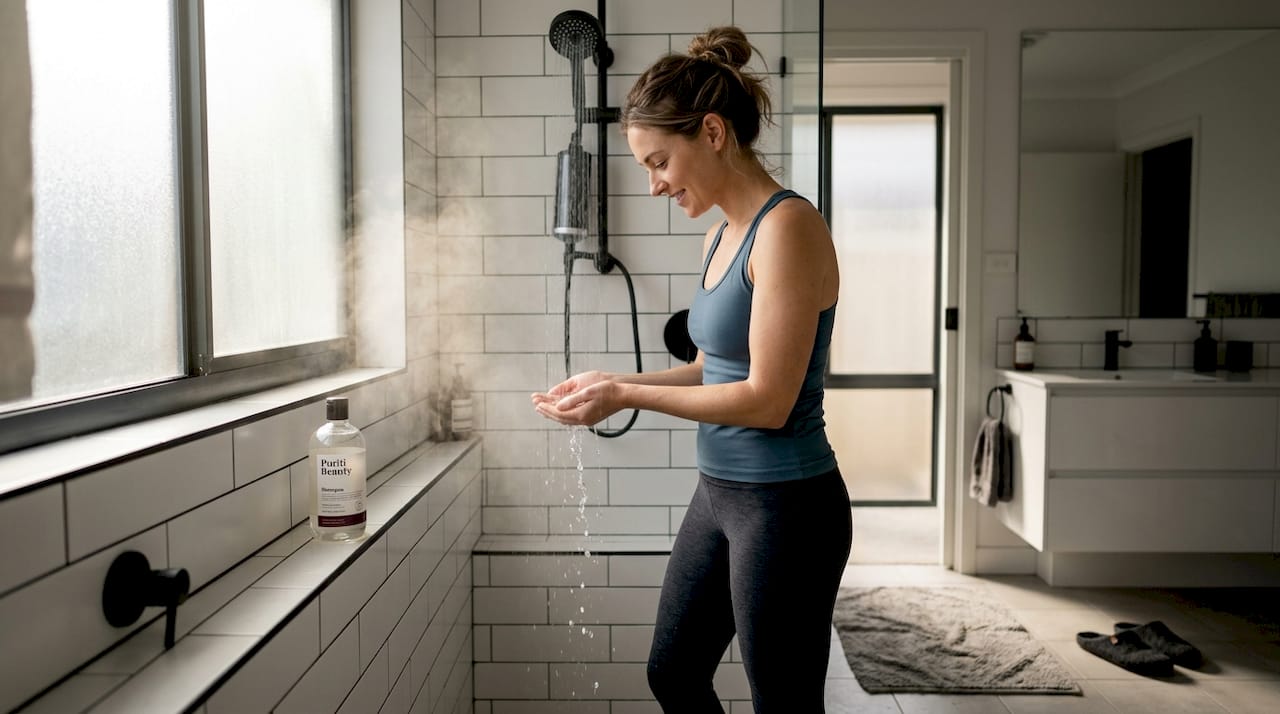
Pro Tip: Do a simple sniff test before and after installation. Fill a glass of water from your shower, smell it before the filter, then repeat after. The difference is usually noticeable immediately, and it’s a quick way to confirm the filter is working.
Here’s how leading Australian-relevant filters compare on key performance metrics:
| Filter | Chlorine removal | Chloramine removal | Lifespan | Approx. annual cost (AUD) |
|---|---|---|---|---|
| PURITI 5-stage | 99.55% (lab tested) | Yes | 3-4 months | $120-150 |
| Sprite NSF 177 | 95-100% | Partial | 3-6 months | $80-130 |
| Earths Water Premium | 95%+ | Yes | 3-6 months | $90-140 |
| Basic carbon filter | 60-80% | No | 2-3 months | $40-70 |
Lab tests show 95 to 100% chlorine removal across premium certified models, with users reporting eliminated chlorine smell and noticeably softer hair. Budget filters without certification often underperform these numbers in real-world conditions.
Most quality shower filters last 3 to 6 months or 10,000 to 50,000 litres, with an annual cost of roughly $70 to $150 AUD depending on the brand. When you refill your filter cartridge regularly on schedule, you maintain consistent filtration performance without interruption.
If you’re unsure which model suits your bathroom setup, it’s worth taking the time to compare shower filter options side by side before purchasing.
Troubleshooting and maximising your results
With your new filtered shower up and running, here’s how to avoid common pitfalls and get the best results.
The most common issue users face is a return of the chlorine smell, usually 3 to 6 months after installation. This is not a sign that the filter failed. It simply means the filter media is saturated and needs replacement. Mark your calendar when you install the filter so you don’t rely solely on smell to judge its condition.
Key troubleshooting points to keep in mind:
- Chloramine is not chlorine. Chloramine requires specific filter media such as calcium sulfite or catalytic carbon. Standard activated carbon filters do not effectively remove chloramine, which means residents in major Australian cities may be getting incomplete filtration without realising it.
- Hard water is a separate issue. Shower filters reduce chlorine and some contaminants but do not fully soften hard water. If you have visible limescale on your showerhead or taps, you may need a separate whole-home softener in addition to your filter.
- High flow rates and very hot water reduce some media’s effectiveness. If you prefer a high-pressure, steaming-hot shower, opt for calcium sulfite or catalytic carbon media, which maintain performance better under those conditions than KDF-55 alone.
- Verify your results. Use a water testing strip (available from pool supply shops) to check chlorine levels before and after your filter. The difference should be immediate and measurable.
“When hard water or chloramine is the underlying issue, ensure your filter specifically targets those contaminants; a mismatch between your local water chemistry and filter media type is the most common reason filters underperform.”
Beyond the filter itself, you can support your skin and hair recovery with a few complementary habits. Pair your filtered shower with a soft and absorbent hair towel to reduce mechanical damage on newly nourished strands. Hair that is no longer stripped by chlorine tends to be more responsive to conditioning treatments, so your existing products will perform better simply because the water is no longer working against them.
Check your filter housing periodically for limescale build-up on the exterior. A light wipe with a damp cloth keeps it looking clean and extends the housing lifespan. The internal media does not require any maintenance between cartridge changes.
Why most Australians under-value shower water quality (and how to change the narrative)
Having mastered the how-to, it’s worth reflecting on why awareness for shower water quality remains so low in Australia and what you can do to change that.
Australian women collectively spend billions each year on skincare, haircare, and wellness products. Yet the water those products are applied to, and the water that strips skin and hair every single day, receives almost no attention in mainstream beauty conversations. That’s a significant oversight.
The beauty industry is skilled at directing attention toward product-based solutions. New serums, richer conditioners, more advanced treatments. These products absolutely have value. But they are all working against a baseline that most people haven’t addressed: the quality of water touching skin and hair for 10 minutes every morning.
The evidence for prioritising water quality is not subtle. It is consistent, measurable, and reproducible in lab conditions. For Australian households specifically, prioritise filters with chloramine capability using calcium sulfite or catalytic carbon, since major cities rely on chloramine and standard filters won’t address it. Check your local water report to confirm.
The science behind beauty-focused water filtration supports this as one of the most cost-effective personal care upgrades available. At $100 to $150 per year, a quality shower filter costs less than a single premium moisturiser and addresses the root cause rather than the symptom.
Changing the narrative starts with asking a simple question before your next beauty purchase: is the water you shower in working with your skin and hair, or against it?
Upgrade your beauty routine with premium filtration
Ready to experience the difference that filtered water makes first-hand? PURITI’s 5-stage shower filter is independently lab tested, with results published publicly so you can verify the 99.55% chlorine removal for yourself.
The PURITI premium shower filter installs in minutes, fits all standard Australian shower arms, and is designed to complement a premium bathroom aesthetic. When it’s time for a cartridge swap, easy refill cartridges keep your filtration running without interruption. To complete your upgraded shower routine, pair it with our microfibre hair towel, designed to protect hair that’s finally free from chemical damage. Healthier water, healthier skin, healthier hair. That’s the full picture.
Frequently asked questions
Do all shower filters remove both chlorine and chloramine?
No, only filters with specific media like calcium sulfite or catalytic carbon remove both. Standard carbon filters do not effectively remove chloramine, which is widely used across major Australian cities.
How long does a shower filter last before needing a change?
Most quality shower filters last 3 to 6 months or up to 50,000 litres. Replace the cartridge sooner if the chlorine smell returns or your skin and hair dryness increases again.
Will a shower filter help with dry skin or eczema?
Yes. Reducing chlorine exposure through a quality shower filter is widely reported to reduce dryness and skin irritation, with noticeable improvements often felt within 1 to 2 weeks.
Are expensive filters really better than budget ones?
Certified premium filters consistently outperform budget options. NSF-certified filters such as those validated at 95 to 100% chlorine removal offer verified performance, while uncertified budget models frequently underdeliver in real-world Australian water conditions.


