


QUICK LINKS

Best home water filter for hair and skin health
TL;DR:
- Australian city water treated with chloramine can harm hair and skin, requiring effective filters.
- Multi-stage, certified shower filters targeting chloramine offer the best protection for beauty and wellness.
- Whole-house filters provide comprehensive water quality benefits but are more costly and complex to install.
Choosing a home water filter sounds straightforward until you realise the options span shower filters, whole-house systems, reverse osmosis units, and under-sink devices, each with very different outcomes for your hair and skin. Australian city water is typically treated with chlorine or chloramine, and both can strip moisture from your hair and aggravate skin sensitivity. With so many products making bold claims, it is easy to spend hundreds on the wrong solution. Understanding how each filter type works, what certifications actually mean, and which one targets your specific water concerns will save you time, money, and a lot of frustration in your beauty routine.
Table of Contents
- How to evaluate water filters for beauty and wellness
- Shower filters: Beauty and wellness game-changers
- Whole-house, drinking, and under-sink filters: When to choose each
- Summary: Which water filter is best for your beauty routine?
- Our honest take: Why filter choice matters more than you think
- Ready for salon results at home?
- Frequently asked questions
Key Takeaways
| Point | Details |
|---|---|
| Prioritise targeted filtration | Choose filters for shower and whole-house water that target both chlorine and chloramine for real hair and skin improvements. |
| Certification matters | Look for NSF-certified, multi-stage filters to ensure effective removal of Australian water contaminants. |
| Consider your lifestyle | Match the filter type to your routine—shower filters for quick results, whole-house for all-over care, and maintain with regular cartridge changes. |
| Reverse osmosis isn’t for showers | Save reverse osmosis filters for drinking water, as they don’t benefit shower or beauty outcomes. |
How to evaluate water filters for beauty and wellness
Before you invest in any filter, it helps to know exactly what you are filtering out. Australian municipal water is treated with chlorine or chloramine (a combination of chlorine and ammonia) to make it safe to drink. Both compounds are effective disinfectants, but they are also linked to dry hair, scalp irritation, and skin sensitivity with regular exposure. Heavy metals such as copper and lead can also be present depending on your home’s plumbing age, and hard water minerals like calcium and magnesium leave residue that dulls hair and blocks pores.
When evaluating any filter, these are the factors that matter most for beauty and wellness outcomes:
- Contaminant targeting: Does the filter specifically address chloramine, not just free chlorine? Many basic filters only handle free chlorine.
- Filtration stages: Multi-stage systems using a combination of KDF-55 (a copper-zinc alloy media that uses redox reactions to neutralise chlorine and heavy metals), activated carbon, and additional media layers outperform single-stage options significantly.
- NSF/ANSI certification: NSF International is an independent body that tests and certifies filter performance. An NSF/ANSI 177 certification specifically covers shower filters. Certified products have been independently tested against their claims, not just self-assessed by the manufacturer.
- Maintenance requirements: Even the best filter will underperform if the cartridge is not replaced on schedule. A clogged or exhausted cartridge can pass contaminants it would otherwise block.
- Fit for purpose: A filter designed for drinking water will not help your shower. Match the filter type to the application.
For city water in Australia, shower and whole-house filters targeting chloramine and certified to NSF standards consistently deliver the best results. Single-media filters that only address free chlorine leave a significant gap, which matters because many Australian water authorities have shifted toward chloramine as their primary disinfectant.
Pro Tip: Before purchasing, contact your local water authority or check their annual water quality report online. Knowing whether your supply uses chlorine or chloramine will tell you exactly which filter media you need.
Understanding filtered water and hair health also helps you set realistic expectations. Filtration removes specific contaminants, and when those contaminants are removed from your shower, the difference in hair texture and skin hydration becomes noticeable within weeks.
Shower filters: Beauty and wellness game-changers
Shower filters are the most targeted and cost-effective upgrade for women focused on hair and skin outcomes. You spend an average of seven to ten minutes in the shower each day, and every minute your skin and hair are absorbing water. If that water contains chloramine or heavy metals, the cumulative impact on your beauty routine is real.
The best shower filters for beauty and wellness use multi-stage, multi-media filtration. Here is what each stage typically does:
- KDF-55 media: Uses a redox reaction to convert free chlorine into harmless chloride and to reduce heavy metals including lead and mercury.
- Activated carbon: Adsorbs chloramine, volatile organic compounds (VOCs), and residual taste and odour compounds that KDF alone may not fully address.
- Vitamin C or ceramic balls (optional stages): Some premium filters include additional stages for pH balancing or mineralisation, which can further benefit hair cuticle smoothness.
Filters that target chloramine with multi-media stages offer measurably improved protection compared to single-stage alternatives. This distinction is particularly important in cities like Sydney and Melbourne, where chloramine use is widespread.
NSF/ANSI certification is your most reliable quality signal. A certified shower filter has been independently tested to confirm it performs as claimed under real-world water conditions, not just laboratory ideals. Without certification, you are relying entirely on the manufacturer’s word.
For anyone investing in premium hair treatments, colour services, or salon-quality haircare products, a PURITI premium shower filter removes 99.55% of chlorine and contaminants across five filtration stages. It is independently lab tested, with results published publicly, making it one of the most transparent options available in Australia.
Pro Tip: Pair your shower filter installation with a cartridge replacement reminder in your phone calendar. Following cartridge maintenance tips ensures your filter never quietly underperforms between replacements.
If you are weighing up options across different brands, comparing shower filters side by side on filtration stages, certifications, and cartridge costs gives you an accurate picture of long-term value.
Whole-house, drinking, and under-sink filters: When to choose each
Beyond shower filters, you might be considering other options for your whole home or for drinking water. Each type has a distinct purpose, and understanding where they overlap or fall short will sharpen your decision.
Whole-house filters are installed at the point where water enters your home, so every tap, shower, bath, and laundry outlet receives filtered water. For families, or for women who want hair and skin benefits extending to every bathroom, the laundry (where your clothes and linen absorb water), and even the bath, a whole-house system maximises coverage. The upfront cost is higher and installation typically requires a plumber, but the per-outlet benefit is strong. The whole-home bundle benefits are most compelling for households with multiple bathrooms or for those who wash hair frequently in different showers.
Drinking water filters and under-sink systems are designed to improve water taste, remove bacteria, and reduce contaminants specific to ingestion. They are excellent for what they do, but they have no impact on your shower water. A reverse osmosis (RO) system under your kitchen sink will not protect your hair or skin.
Reverse osmosis systems are worth understanding specifically because they are marketed aggressively as premium solutions. RO removes an exceptionally wide range of contaminants for drinking, but RO wastes significant water at a ratio of roughly two to four litres discarded for every one litre produced. In Australia, where water conservation is a genuine concern in most states, this is a relevant consideration.
| Filter type | Coverage | Hair and skin benefit | Avg. cost | Water waste | Best for |
|---|---|---|---|---|---|
| Shower filter | Shower only | High | $80–$250 | None | Renters, apartments, beauty focus |
| Whole-house filter | All outlets | Very high | $400–$1,500+ | Low | Families, multi-bathroom homes |
| Under-sink / RO | Drinking only | None | $300–$1,200 | High (RO) | Drinking water purity |
| Countertop filter | Drinking only | None | $100–$400 | Low | Drinking, portability |
For most women prioritising beauty outcomes on a practical budget, a shower filter delivers the highest return relative to cost. Whole-house systems are the next logical upgrade when budget and home ownership allow.

Summary: Which water filter is best for your beauty routine?
Now you are ready to bring it all together. The right filter depends on your living situation, your beauty priorities, and your water supply type.
Australia’s major cities use chloramine as a disinfectant, and this changes the filter equation significantly. Basic carbon-only filters, which are common and inexpensive, are often ineffective against chloramine. Filters targeting specific Australian water issues such as chloramine and heavy metals consistently produce the best results for beauty-focused users.
| Use case | Recommended filter | Key reason |
|---|---|---|
| City apartment renter | Shower filter (multi-stage) | Easy to install, no plumbing needed |
| Beauty addict with colour-treated hair | Shower filter with NSF cert | Protects colour, improves softness |
| Homeowner, multiple bathrooms | Whole-house filter | All-outlet coverage, long-term savings |
| Family with children | Whole-house filter | Skin and immune benefits for all |
| Drinking water only concern | Under-sink / RO | Taste and purity focus |
Use this decision framework to prioritise your upgrade:
- Identify your water type. Check your local water report for chloramine use, heavy metals, or hardness levels.
- Define your primary goal. Hair and skin improvement points you to a shower or whole-house filter, not a drinking filter.
- Check certifications. Look for NSF/ANSI 177 for shower filters or NSF/ANSI 42 and 53 for whole-house and drinking systems.
- Consider your living situation. Renters should prioritise no-install or simple shower filter solutions. Homeowners have more options.
- Plan for maintenance. Factor in cartridge replacement costs and frequency when comparing total cost of ownership.
“For the best beauty and wellness outcomes, prioritise a multi-stage shower filter that specifically targets chloramine and carries independent NSF certification. This combination addresses the most common and impactful water quality issues in Australian homes.”
Understanding how filters impact beauty at the cellular level reinforces why filtration stage design matters so much more than marketing language.
Our honest take: Why filter choice matters more than you think
Most people focus their beauty investment on what goes onto their hair and skin, and almost nobody questions what the water itself is doing. We have seen women spend thousands on salon treatments, premium shampoos, and professional skincare, then rinse it all away in unfiltered chloramine-treated water. The irony is real.
Shower filters are often treated as an afterthought, a novelty item rather than a foundational step. But the evidence is clear. Multi-stage, chloramine-targeted shower filters with NSF certifications are genuinely endorsed by the modern beauty community for good reason. They remove the compounds that actively work against your beauty investments.
Whole-house filters are perhaps the most underrated option. If you have ever noticed your skin feels different after a holiday in a hotel with soft water, that is whole-house filtration at work.
The uncomfortable truth is that filter choice is not just about water quality. It is about whether your other beauty purchases actually perform as intended. Getting the science behind beauty filters right first means every product you use after performs better.
Ready for salon results at home?
If you are ready to see the difference filtered water can make for your beauty rituals, here is how to get started.
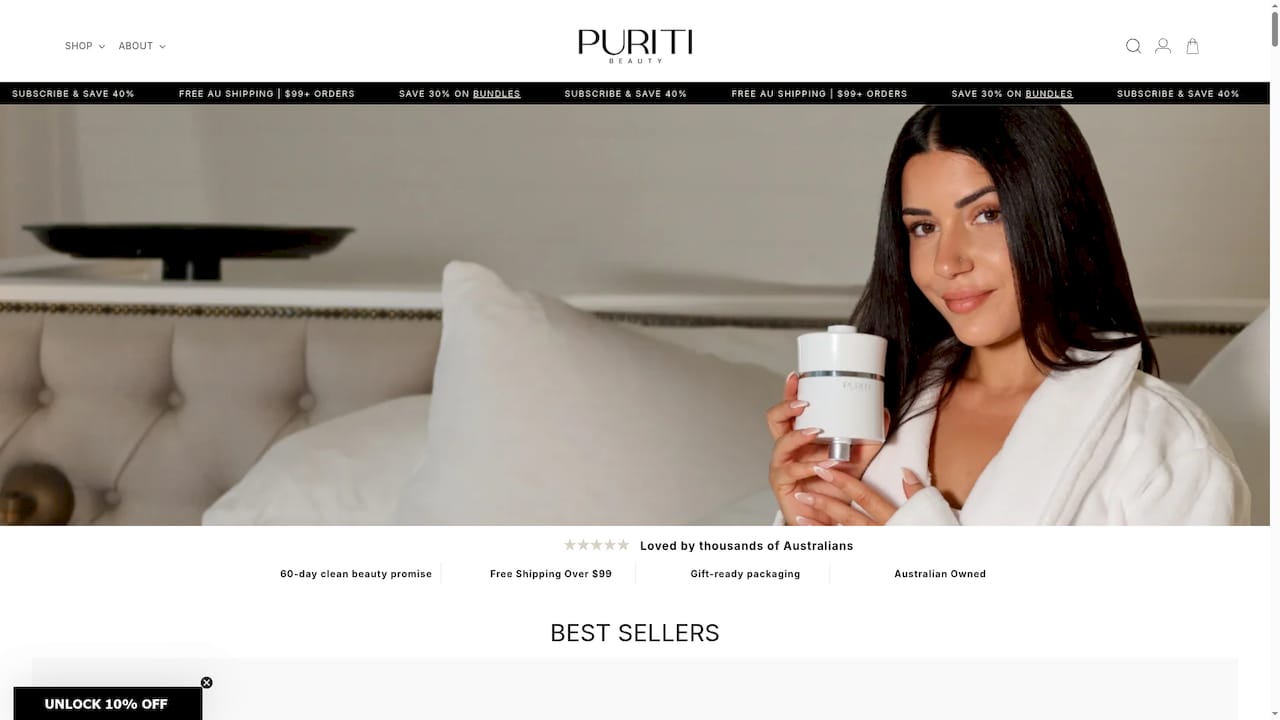
PURITI’s premium shower filter removes 99.55% of chlorine and contaminants across five independently verified filtration stages, and it is designed to sit beautifully in any premium bathroom. Keeping your filter performing at its peak is simple with a scheduled refill cartridge replacement every three to six months. For whole-home coverage, the home wellness bundle extends those benefits to every outlet in your home. Explore the full PURITI range and match the right solution to your beauty goals.
Frequently asked questions
Which home water filter is best for sensitive skin and hair?
Shower filters targeting chloramine, particularly multi-stage options with NSF certification, offer the strongest protection for sensitive skin and hair. They remove the specific compounds most responsible for dryness and irritation in Australian city water.
Is a whole-house filter better than a shower filter?
A whole-house filter delivers all-over results across every water outlet in your home, but a quality shower filter remains the simplest, most cost-effective upgrade for direct hair and skin improvement.
Does reverse osmosis improve shower water for beauty?
Reverse osmosis is designed exclusively for drinking water and has no effect on your shower. Shower or whole-house filters are the correct choice for beauty-focused water treatment.
How often do I need to replace my shower filter cartridge?
Replace your shower filter cartridge every three to six months to maintain peak filtration performance for hair and skin benefits, or follow the specific guidance from your filter manufacturer.


