


QUICK LINKS

Aluminium shower filters: luxury beauty benefits explained
TL;DR:
- Aluminium shower filters offer a premium aesthetic and easy maintenance but do not inherently improve water filtration.
- Effective skin and hair benefits depend on the filter media inside, with proper matching to local Australian water disinfection methods.
- Certification and matching media to local water conditions are essential for genuine performance, beyond just the aluminium housing.
Finding a shower filter that genuinely delivers for your hair and skin while looking refined enough for a premium bathroom is harder than it sounds. The Australian market is crowded with options that promise spa-worthy results but vary enormously in both build quality and filtration capability. Water quality across Australian cities adds another layer of complexity, with different municipalities using different disinfectants that affect what filter media you actually need. This guide cuts through the noise, explaining what aluminium shower filters genuinely offer, where real beauty benefits come from, and how to make a confident, evidence-based choice.
Table of Contents
- What sets aluminium shower filters apart
- Real benefits: what aluminium shower filters do for your hair and skin
- Independent certification and matching to Australian water chemistry
- Potential downsides and misunderstood limitations
- Why beauty-focused Australians should rethink their shower filter priorities
- Upgrade your shower for true luxury and results
- Frequently asked questions
Key Takeaways
| Point | Details |
|---|---|
| Luxury appearance matters | Aluminium shower filters deliver a premium, spa-worthy look and robust feel for luxury bathrooms. |
| Filter media is crucial | True beauty and skin benefits come from the type of filtration media used, not just the metal housing. |
| Match filter to water type | For best results, ensure your filter and its cartridge suit your local water chemistry—especially in Australia. |
| Check certifications | Independent testing and third-party certifications ensure your chosen filter delivers on its promises. |
| Expect realistic results | Shower filters offer subtle improvements, but no dramatic beauty transformations should be expected on their own. |
What sets aluminium shower filters apart
Walk into any well-appointed bathroom showroom and aluminium instantly reads as premium. The material carries weight, both literally and aesthetically, in a way that plastic simply cannot replicate. For women who have invested carefully in their vanity, skincare shelf, and towel collection, a bulky white plastic filter on the shower arm is visually jarring. An aluminium-bodied filter, by contrast, integrates naturally alongside brushed fixtures and stone surfaces.
The premium shower filter category has grown significantly because consumers are treating their shower as an extension of their beauty routine, not just a functional space. This shift in thinking is well documented across the beauty and wellness industry.
Key aesthetic and practical advantages of aluminium housing include:
- Visual cohesion: Metallic finishes in silver, brushed gold, or matte black align with contemporary bathroom palettes.
- Tactile quality: The heft of a metal body signals durability and premium construction every time you handle it.
- Easy maintenance: Aluminium’s non-porous surface resists mould, soap scum, and bacterial build-up, making it far simpler to keep pristine than textured plastic alternatives.
- Longevity of the body: While cartridges require regular replacement, an aluminium housing can last for years without degrading in appearance or integrity.
- Positioning as a beauty accessory: A well-designed filter sits alongside your Luxe Beauty Hair Towel and other considered bathroom pieces as part of a curated self-care environment.
“Aluminium-bodied shower filters are perceived as a ‘premium’ upgrade, offering a hefty metal feel and a sleek, easy-to-clean appearance for luxury beauty and wellness.” CNN Underscored
That perception carries real value. Your bathroom environment influences how you feel about your routine, and a filter that looks intentional and refined reinforces the quality of the overall experience. However, the body material is only part of the picture.
Real benefits: what aluminium shower filters do for your hair and skin
Here is where many buyers benefit from a clear distinction. The aluminium housing elevates the look and feel of the product, but it does not filter your water. The genuine beauty benefits from any shower filter come entirely from the filter media inside the cartridge.
Filter media are the active materials that capture, neutralise, or transform contaminants in your water. In quality shower filters, you will typically find a combination of:
- Activated carbon: Highly porous carbon that adsorbs chlorine, volatile organic compounds, and odours.
- KDF-55 (Kinetic Degradation Fluxion): A copper-zinc alloy that uses redox reaction to remove chlorine, heavy metals such as lead, and some bacteria.
- Calcium sulphite: Particularly effective at neutralising chlorine and chloramine, even in cold water, which matters for Australian shower conditions.
| Filter media | Primary target | Effective against chloramine? |
|---|---|---|
| Activated carbon | Chlorine, VOCs, odour | Limited |
| KDF-55 | Chlorine, heavy metals | Partial |
| Calcium sulphite | Chlorine, chloramine | Yes |
| Multi-stage blend | Broad spectrum | Best performance |
As the filtration benefits overview from CNET notes, hair and skin benefits from shower filters are linked to their reduction of chlorine, chloramine, and other impurities, not the metal housing.
When filtration is effective, the results for hair and skin are tangible:
- Reduced dryness and flaking: Chlorine strips natural oils from the scalp and skin. Removing it means your skin’s lipid barrier is less disrupted after every shower.
- Less colour fade: For those with coloured or chemically treated hair, chlorine is a significant contributor to faster fade and altered tone. A quality filter can extend the life of a colour treatment noticeably.
- Calmer, less reactive skin: People with eczema, rosacea, or general sensitivity often report reduced irritation when showering in filtered water.
- Improved manageability: Hair that is not constantly exposed to oxidising chlorine tends to retain moisture better and feel smoother at the cuticle level.
The water filtration science that supports these outcomes is well established. Understanding it helps you evaluate any filter on its actual merits rather than its marketing language.
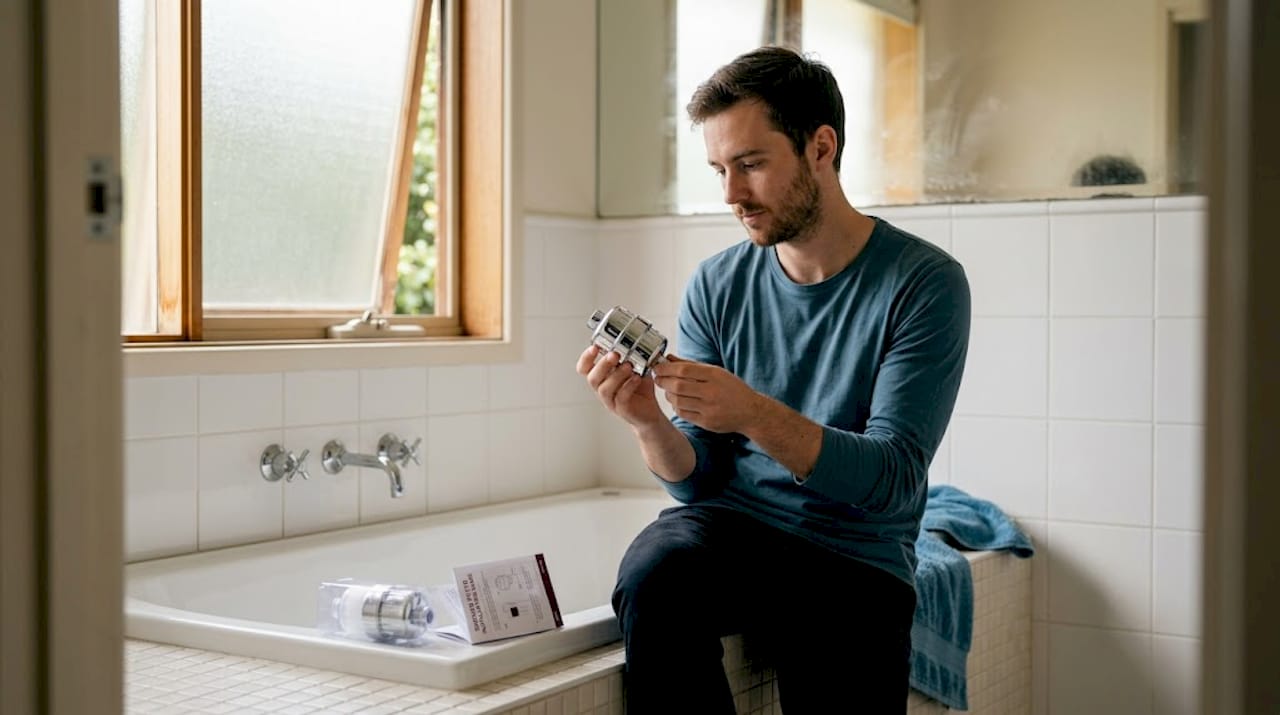
Pro Tip: When reviewing a shower filter’s specifications, look for the specific media listed on the shower filter cartridge packaging. A filter that names its media and provides test data is significantly more trustworthy than one that uses vague language like “multi-stage purification” without detail.
Independent certification and matching to Australian water chemistry
Knowing which media to look for is one step. Confirming that the filter actually performs as claimed is another. This is where independent certification becomes essential, and where many consumers lose money on underperforming products.
In Australia, the disinfection method used by your local water authority determines what filter media you need. This is a critical and frequently overlooked detail:
- Identify your local disinfectant. Most major Australian cities have shifted from simple chlorine to chloramine (a combination of chlorine and ammonia) because it is more stable over long distribution distances. Sydney, Melbourne, Brisbane, and Adelaide all treat water with chloramine.
- Match media to the disinfectant. Standard activated carbon, while excellent for chlorine removal, has significantly reduced effectiveness against chloramine. Calcium sulphite and specialised KDF blends are needed for chloramine-disinfected water.
- Look for third-party testing. Certifications from recognised bodies, or independently published lab results, confirm that a filter delivers the removal rates claimed. Do not rely on self-reported brand claims alone.
- Check cartridge replacement intervals. A media blend working against both chlorine and chloramine exhausts faster than one handling only chlorine. Understand realistic replacement schedules before purchasing.
- Consider water flow rate. Shorter contact time between water and filter media, which is common in high-pressure Australian showers, reduces filtration efficiency. Filters designed with longer media columns or denser packing compensate for this.
| Factor | Why it matters | What to check |
|---|---|---|
| Disinfectant type | Determines media requirement | Ask your local water authority |
| Third-party certification | Confirms actual performance | Published lab results |
| Cartridge lifespan | Affects running cost and effectiveness | Manufacturer’s verified data |
| Contact time | Affects chloramine removal | Media density and column length |
| Flow rate compatibility | Affects pressure and filtration | Filter specification sheet |
As noted in research on chloramine suitability, filtration effectiveness is constrained by filter contact time and having media suitable for chloramine-disinfected water, which is common in Australia. The effectiveness of any shower filter, including aluminium models, depends on matching the media to your local water quality and looking for performance certification.
Pro Tip: Contact your state water authority directly and ask whether your area uses chlorine or chloramine disinfection. This single piece of information is the most important factor in selecting a refill cartridge that will actually work for your water.
Potential downsides and misunderstood limitations
A balanced perspective matters here, because expectations shaped by aspirational marketing often outpace what shower filters can realistically achieve.
Dermatologists and independent reviewers consistently note that the evidence for dramatic hair and skin transformation from shower filters is limited. Most users notice improvements rather than complete resolution of concerns. This is an important distinction, particularly if you are considering a shower filter as a response to a significant skin condition.
Key limitations to understand:
- Filters are not a cure-all. A shower filter reduces one source of skin and hair stress. Diet, hydration, genetics, product selection, and humidity all play equally important roles.
- The aluminium body adds no filtration value. A high-quality aluminium housing paired with a poor cartridge will consistently underperform a well-specified plastic filter with superior media.
- Benefit timelines vary. Some users notice a difference within days. Others, particularly those in areas with already moderate water quality, may find improvements more subtle.
- Maintenance cannot be ignored. Even the most beautiful aluminium housing will harbour bacteria and lose performance if the cartridge is not replaced on schedule.
“Dermatology experts say there is limited direct evidence for hair and skin transformation and recommend researching your local water quality and matching the filter, but note there’s low downside especially for sensitive skin.”
This balanced view from dermatology perspectives is not a reason to avoid shower filters. It is a reason to approach your selection with clear criteria: match the media to your water, verify the claims with independent data, and treat the filter as one element of a broader approach to hair and skin health.
People with sensitive skin, colour-treated hair, or concerns about scalp irritation stand to gain the most. For this group, the downside of trying a quality filter is genuinely low, and the potential upside is meaningful. The key is choosing a filter that earns its premium price through performance, not just appearance. Understanding the water filtration and beauty connection in depth will help you set realistic expectations and make a more satisfying investment.
Why beauty-focused Australians should rethink their shower filter priorities
Here is something the broader market conversation tends to overlook: most people buying an aluminium shower filter are paying a premium primarily for aesthetics. That is a completely valid reason. But the assumption that premium materials signal premium filtration is where a significant gap exists between expectation and outcome.
We have seen many customers arrive having spent considerably on a well-designed filter, only to discover the cartridge inside was not formulated for chloramine, which is the dominant disinfectant across most of Australia’s major cities. The aluminium housing looked exceptional. The water quality improvement was minimal, not because filtration cannot work, but because the wrong media was used for their specific water.
The reframe we would encourage is this: treat the aluminium housing as a non-negotiable quality signal for your bathroom, and treat the cartridge specification as the non-negotiable performance requirement. Both criteria matter. Neither should be compromised. A truly premium shower filter is one that delivers on both simultaneously.
When you understand the science behind beauty and water filtration, your purchasing decision becomes cleaner. You stop asking “does this look premium?” as your only question, and you start asking “is this certified, is this media blend correct for my area, and does this brand publish its test results?” That shift in thinking is what separates a genuinely effective investment from a beautiful but underperforming product.
Australian water conditions vary more than most people realise. Perth’s water is harder and treated differently to Melbourne’s. Brisbane’s chloramine concentrations differ from Adelaide’s. A single cartridge specification cannot optimally serve every postcode. The brands that acknowledge this complexity and offer guidance accordingly are the ones worth your attention and your money.
Upgrade your shower for true luxury and results
If you are ready to invest in a shower filter that genuinely earns its place in a luxury bathroom, the criteria are clear: aluminium build quality, independently verified filtration, and cartridge media matched to Australian water conditions.
PURITI’s premium aluminium shower filter is built from aluminium titanium alloy and engineered with a 5-stage filtration system that removes 99.55% of chlorine and contaminants, with lab results published publicly. Our filters are designed specifically for Australian water chemistry, including chloramine-treated supplies across major cities. Explore the full shower filter collection to find your ideal match, and pair it with the correct refill cartridges to maintain performance across every use. This is Step Zero of a beauty and wellness routine that is as evidence-based as it is refined.
Frequently asked questions
Does an aluminium shower filter improve hair and skin better than plastic models?
The aluminium body itself does not filter water more effectively; genuine hair and skin results depend entirely on the filter media’s ability to remove chlorine, chloramine, and other impurities from your water.
What should I look for when choosing an aluminium shower filter for Australian water?
Confirm that the filter media match your local water type, particularly whether your area uses chloramine, and verify that performance certification is backed by independently published test results rather than self-reported claims.
Are luxury aluminium shower filters worth the extra investment?
If a refined aesthetic and easy maintenance matter to you, aluminium is a sound choice; however, certification and media specification will have far more impact on actual beauty and skin outcomes than the housing material alone.
Can a shower filter replace other skin or hair treatments?
A quality shower filter reduces one significant source of skin and hair stress by removing harsh chemicals, but limited direct evidence supports using it as a sole treatment rather than as a complementary step within a broader beauty routine.
How often should I replace the filter cartridge in an aluminium shower filter?
Most high-quality cartridges are effective for 3 to 6 months, though your actual timeline depends on local water quality and household usage, so always follow the manufacturer’s verified guidelines for your specific product.


